I will use the Heidelberg Catechism as an example.
1. Open your Heidelberg Catechism resource. Under parallel sets, the default "All parallel resources" will show you all the resources you own which have HC milestones. The list in the parallel resources popup contains all the resources in your library that contain a compatible milestone to your current milestone in the current resource (list list can change depending on where you are in the resource).
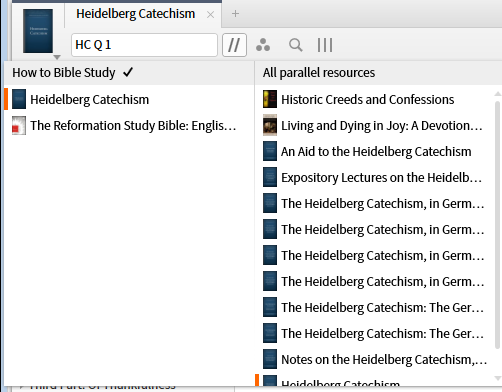
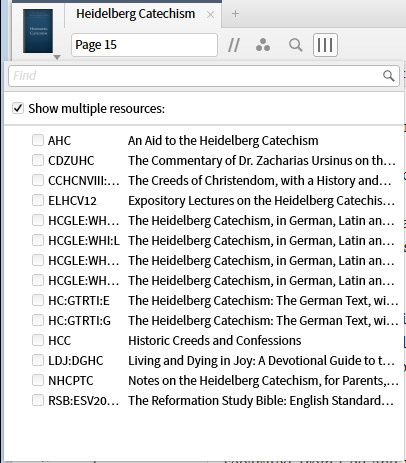
2. This should be the same list as the resources you can use in a multi-view panel.
The multi-view panel shows all resources that contain a milestone index with a compatible datatype to any of the milestone indexes in the current resource. It is even possible for this list to contain resources that don't actually contain any milestones matches from the current resource (such as in fragment resources that only contain partial coverage of the datatype).
In some cases, this can be the same list. In other cases this can be radically different, particularly for resources that contain multiple non-overlapping milestone indexes (such as the Ante-Nicene Fathers: https://ref.ly/logosres/anf01)
3. To find links to those milestones select a question and right click.
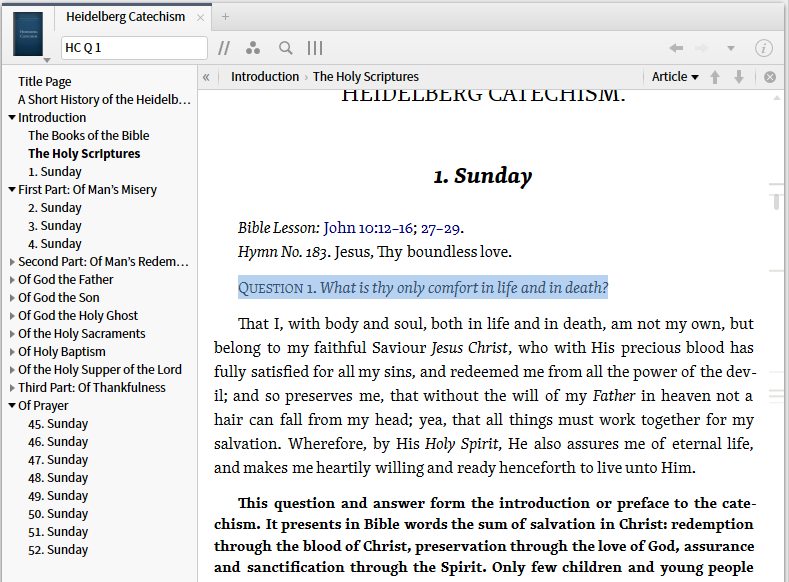
4. Note that when you right click, all the text for that milestone becomes highlighted. On the right side, select reference; on the left side, select search all resources.
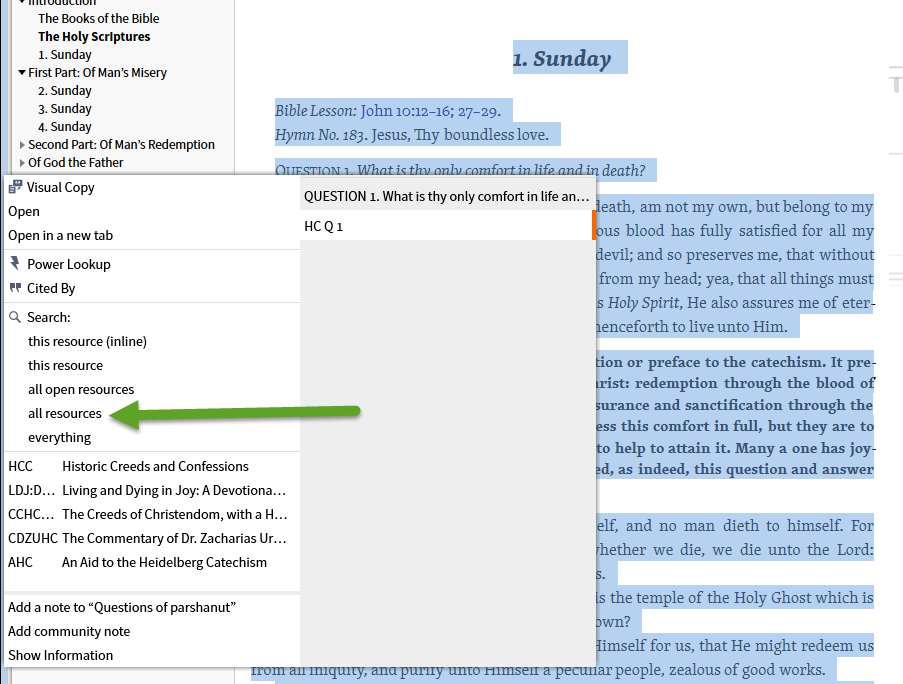
5.This is the search created by Logos.
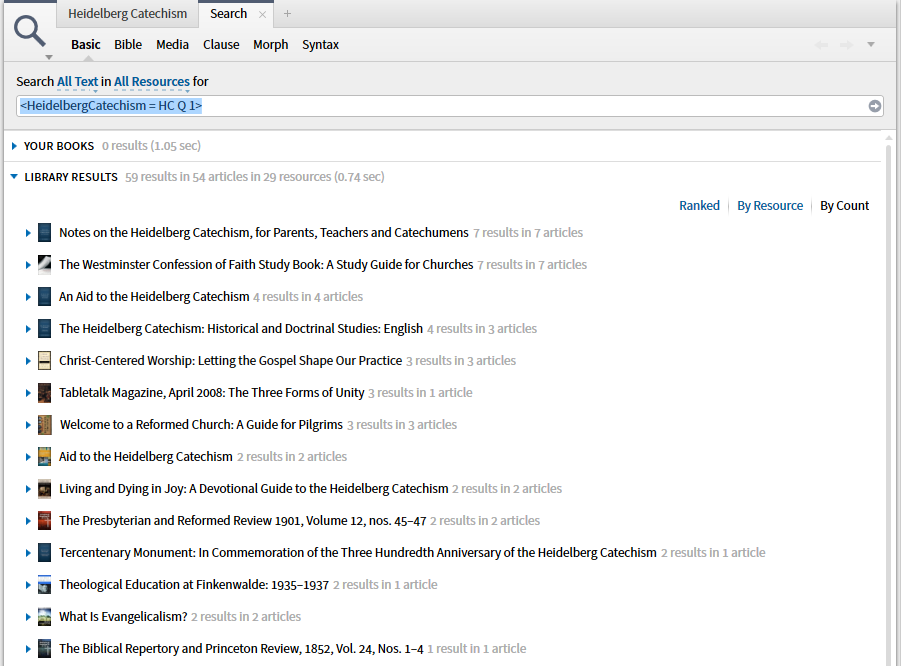
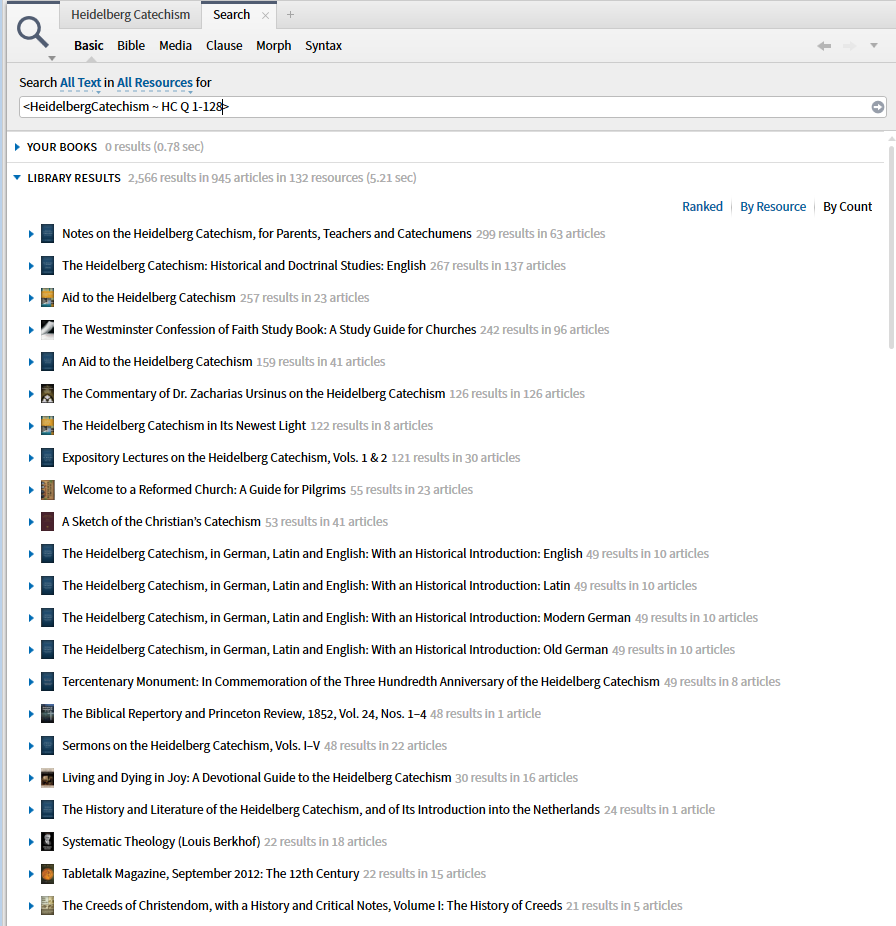
6. Change the operator to ~ and extend to the full range 1-128. Run this query and you should get all links to the HC milestones.
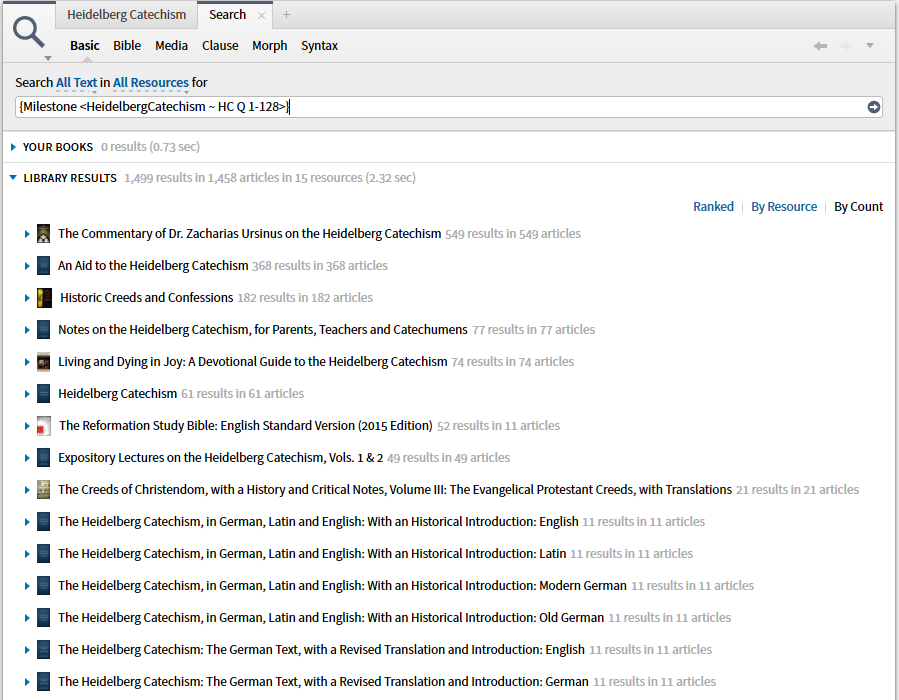
7. You can also verify which resources have HC as milestone by surrounding the search argument above with the {Milestone <>} search item. This should match the results of 1 and 2 above.
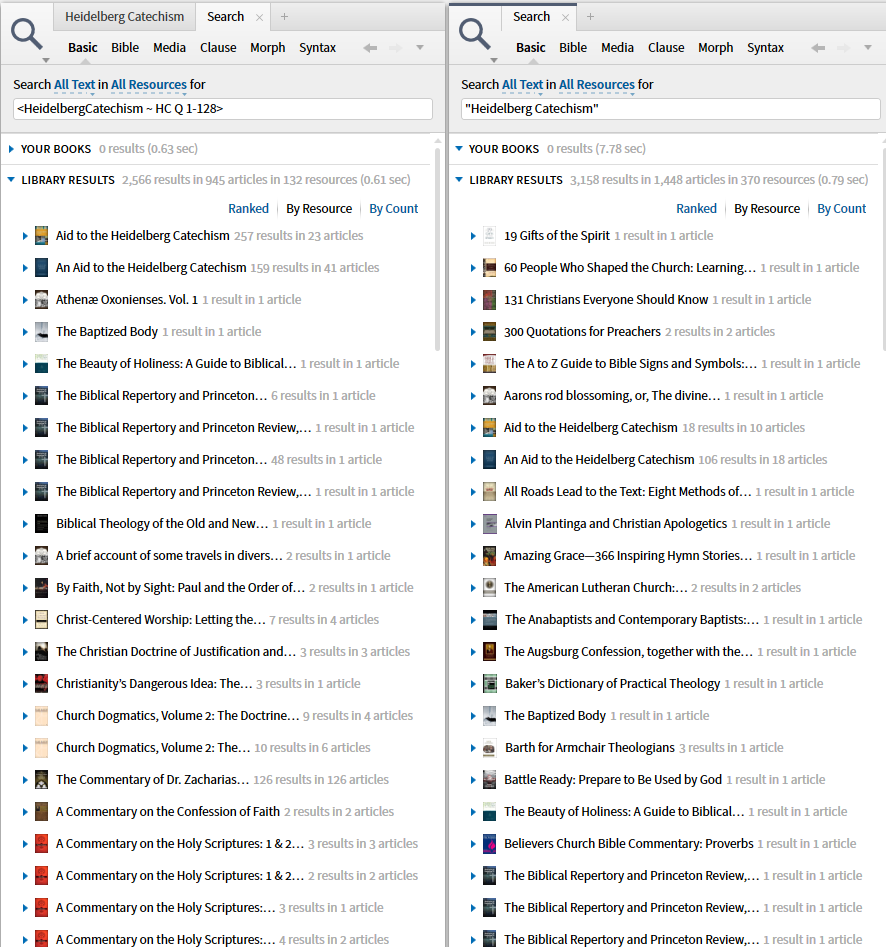
8. Note that if you question the completeness of the tagging you can also run a simple text search for "Heidelberg Catechism" and compare the resources included in the results against those in step 6. They should differ by those that mention rather than reference in HC.
This method should work for any resource that has its own datatype.