This post looks at the datatype operators that I have been using but not explaining in previous posts. For my example, I will use the Ritual Decalogue Ex 34:11-26.
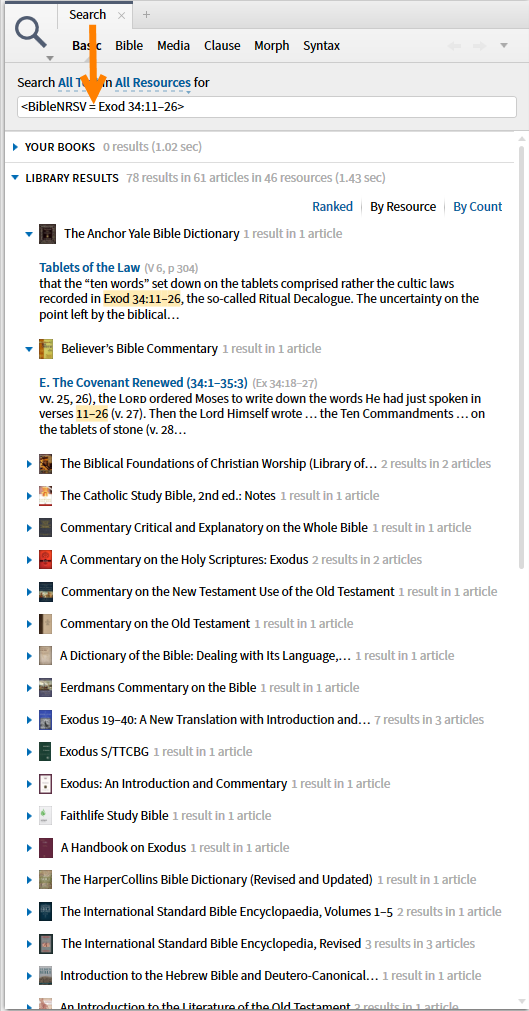
How do I find references to the entire Ritual Decalogue and nothing more?
The datatype reference operator "=" provides this function. This is what is built via the Context Menu.
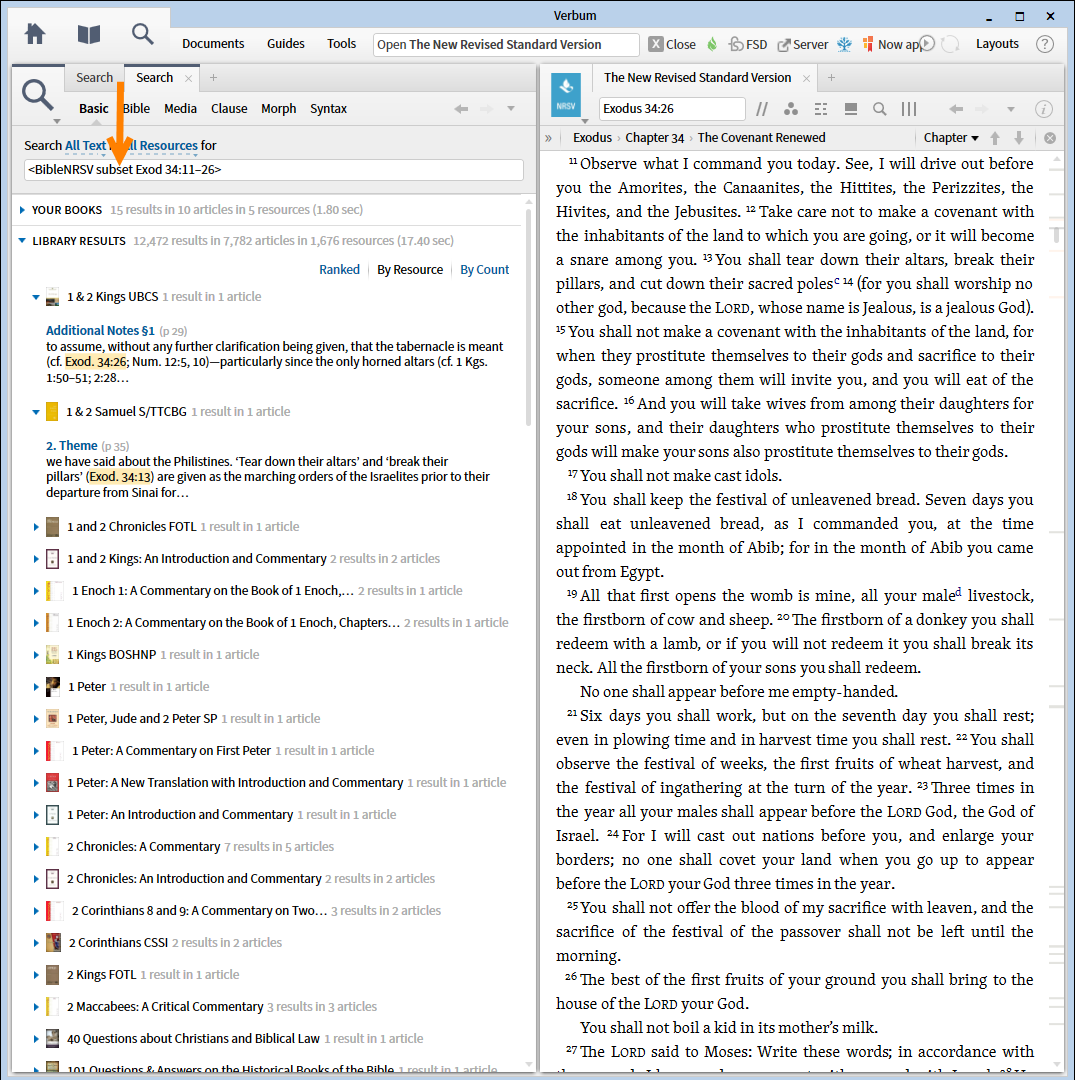
How do I find references to only a portion of the Ritual Decalogue?
The datatype reference operator "subset" provides this function.
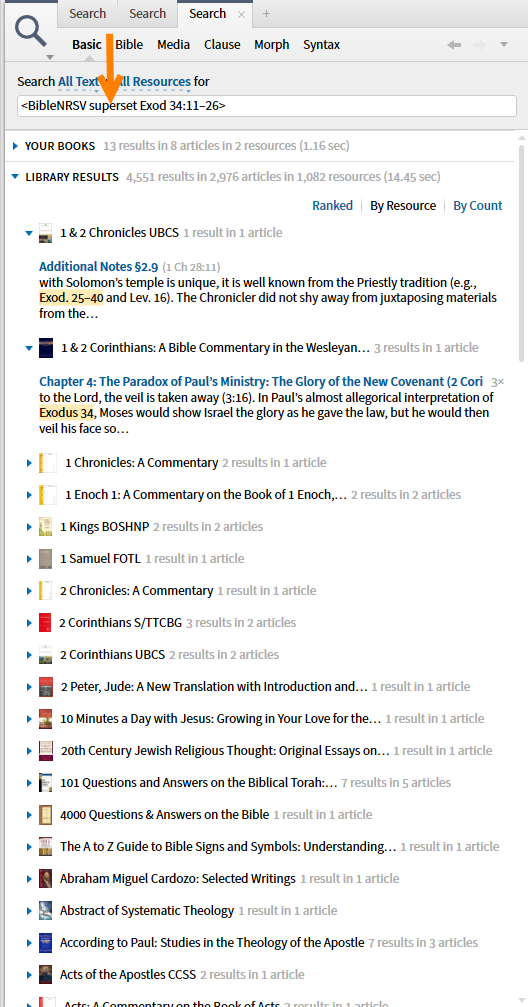
How do I find references to larger passages that include the entire Ritual Decalogue?
The datatype reference operator "superset" provides this function.
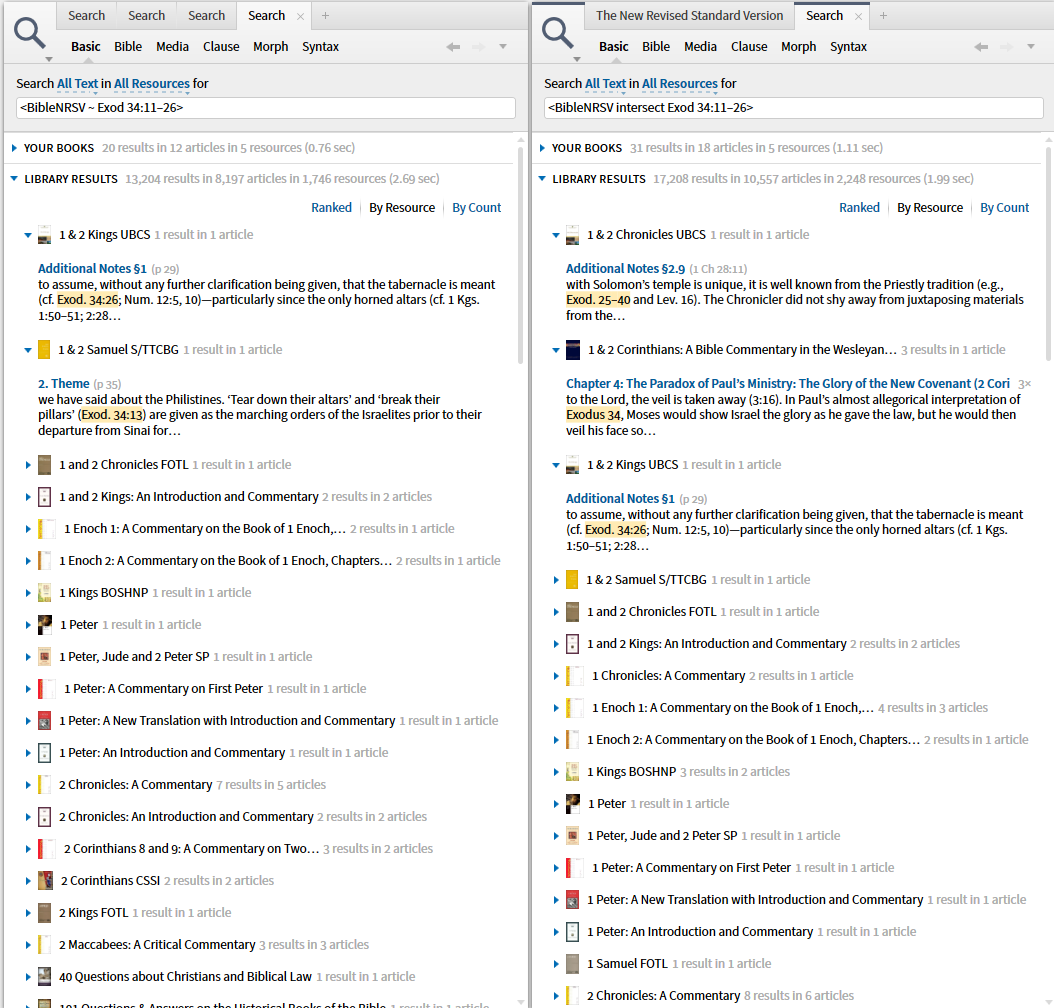
How do I find references that in any way contain the Ritual Decalogue or a portion thereof?
The datatype reference operators "~" and "intersect" provide this function. "~" is the default operator when no operator is specified. "~" does not cross chapter boundaries while "intersect" will.
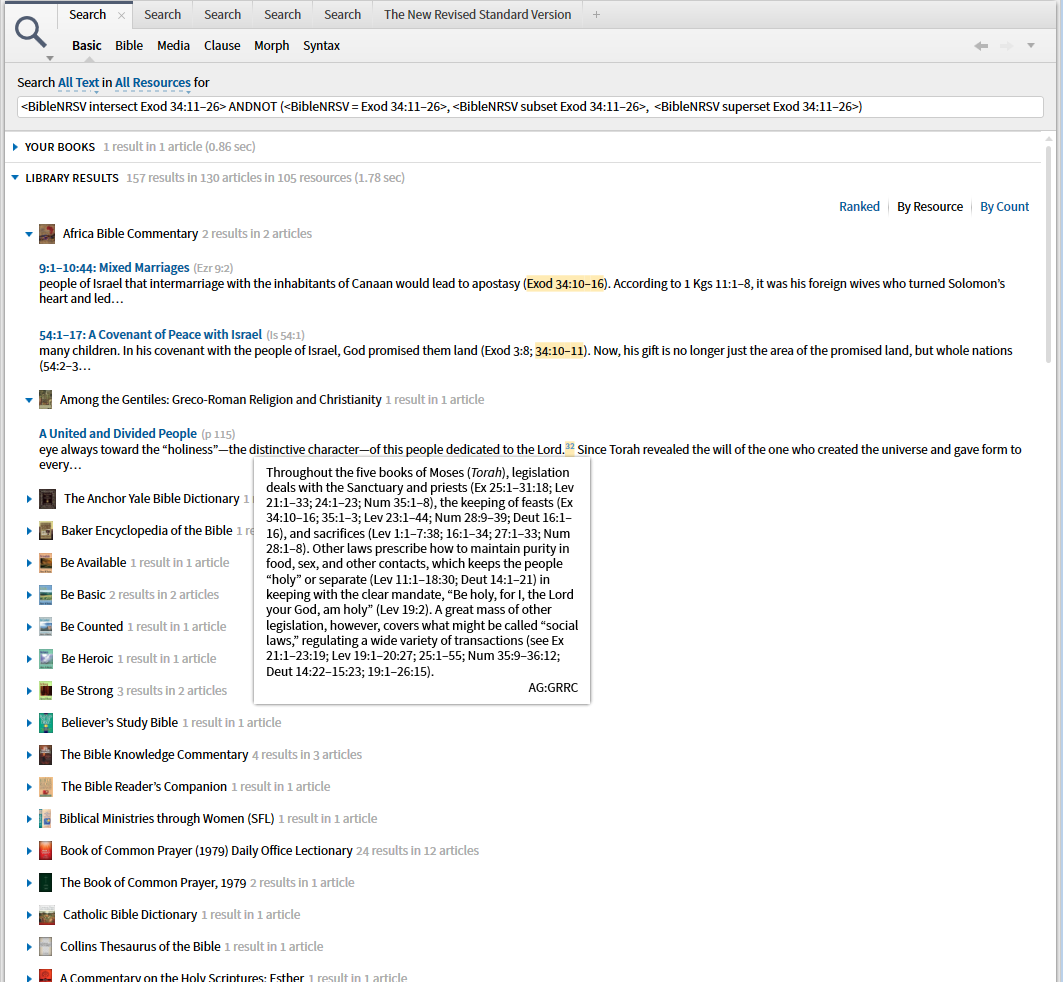
How do I find references to larger passages that include only a portion of Ritual Decalogue?
Take the most inclusive search argument <BibleNRSV intersect Exod 34:11–26> and subtract out (ANDNOT) the =, subset and superset results: <BibleNRSV intersect Exod 34:11–26> ANDNOT (<BibleNRSV = Exod 34:11–26>, <BibleNRSV subset Exod 34:11–26>, <BibleNRSV superset Exod 34:11–26>)
Rule of thumb on use:
- ~ and intersect: a mishmash of everything at one ... most useful when there are few hits
- intersect ANDNOT (superset, =, subset): double check no useful overview information is lost without dealing with mishmash
- superset: high level overview
- =: basic overview
- subset: most detail