I am looking for some help in understanding a Hebrew concept (starting from a very low level of Hebrew!)
I was studying in Genesis 13 and came across the comment below in NICOT on Genesis 13:14
Many translators ignore the small Hebrew particle nāʾ in the divine speech, but it is reflected in our translation as please, which is its normal English equivalent. It occurs many times in the OT, some sixty times in Genesis alone. But only four times in the entire OT does God use the word in addressing a human being: here; 15:5; 22:2; Exod. 11:2.
Victor P. Hamilton, The Book of Genesis, Chapters 1–17 (The New International Commentary on the Old Testament; Grand Rapids, MI: Wm. B. Eerdmans Publishing Co., 1990), 394.
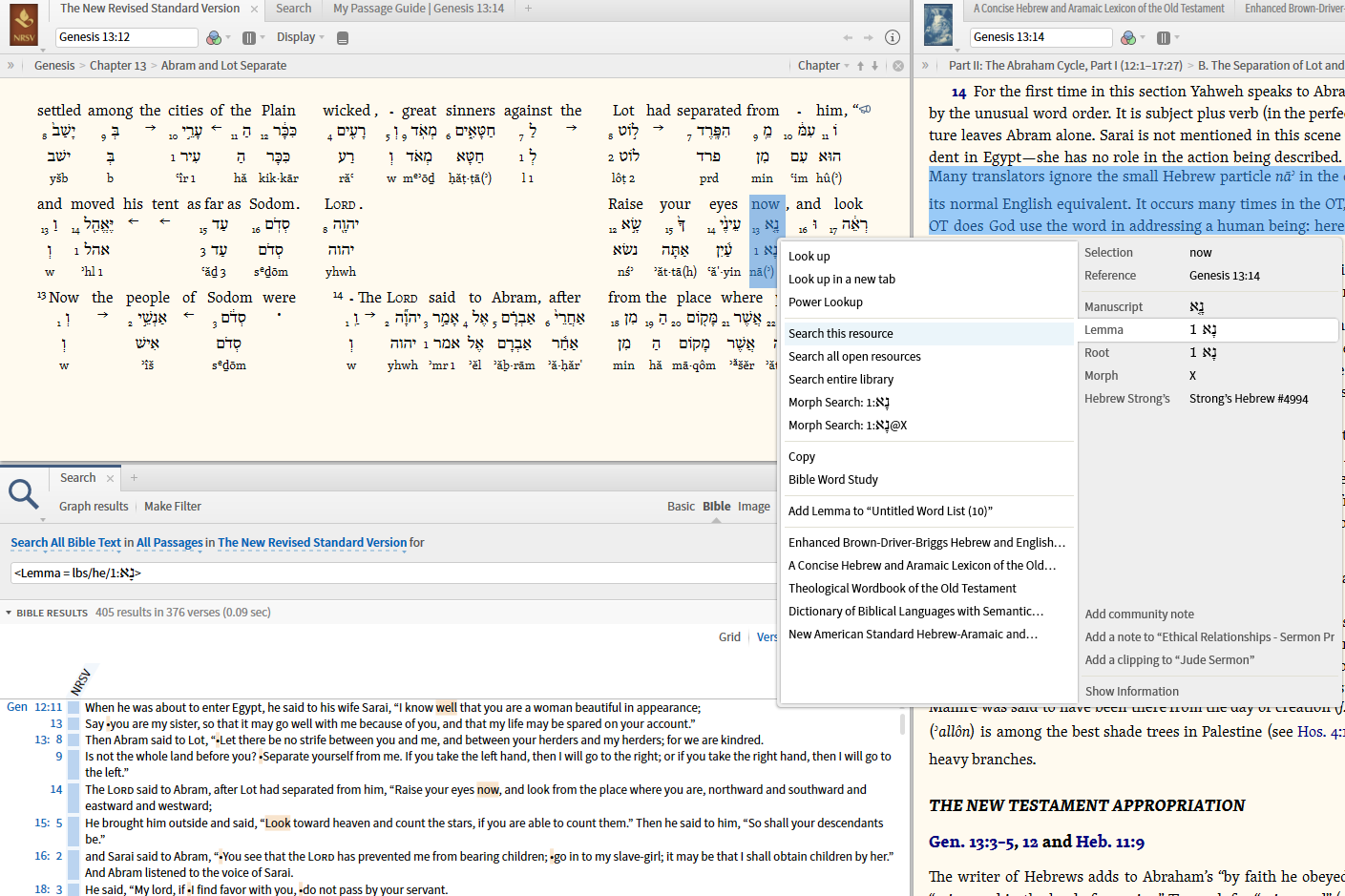
I wanted to verify this statement and so did a lemma search for the word and found 405 occurrences:
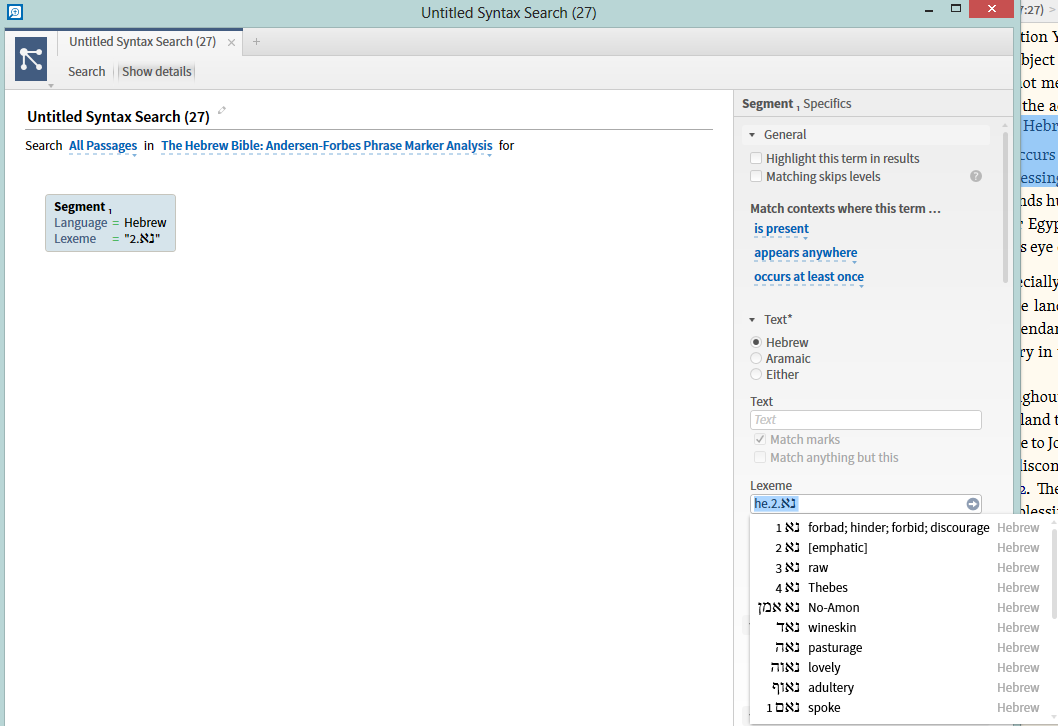
I then wanted to narrow this down to "divine speech" and so started looking at a syntax search where I found the emphatic form (which resulted in the same 405 results) was numbered "2" as opposed to "1"
This is confirmed when looking up the word in AFAT
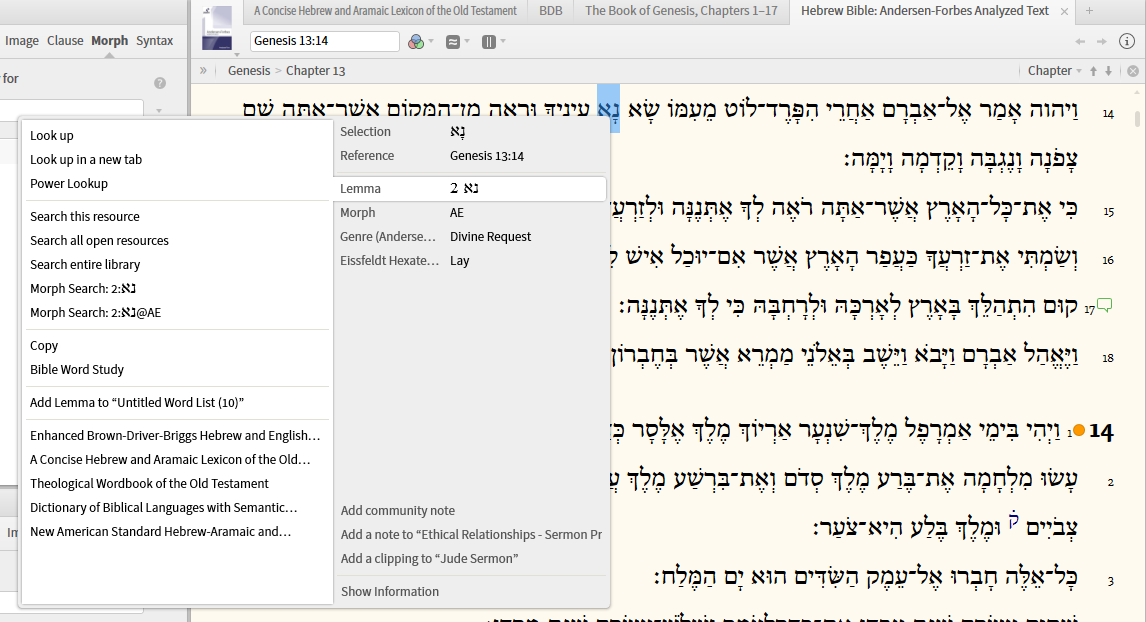
So my question comes down to - are the lemma numberings standardised or are they dependent on the different morphologies with their associated tagging?
(I'm not sure I am even expressing the question correctly but hope someone can advise )
)
Thanks, Graham