What is the best way to find the Hebrew equivalent of Greek words.
Many ways.
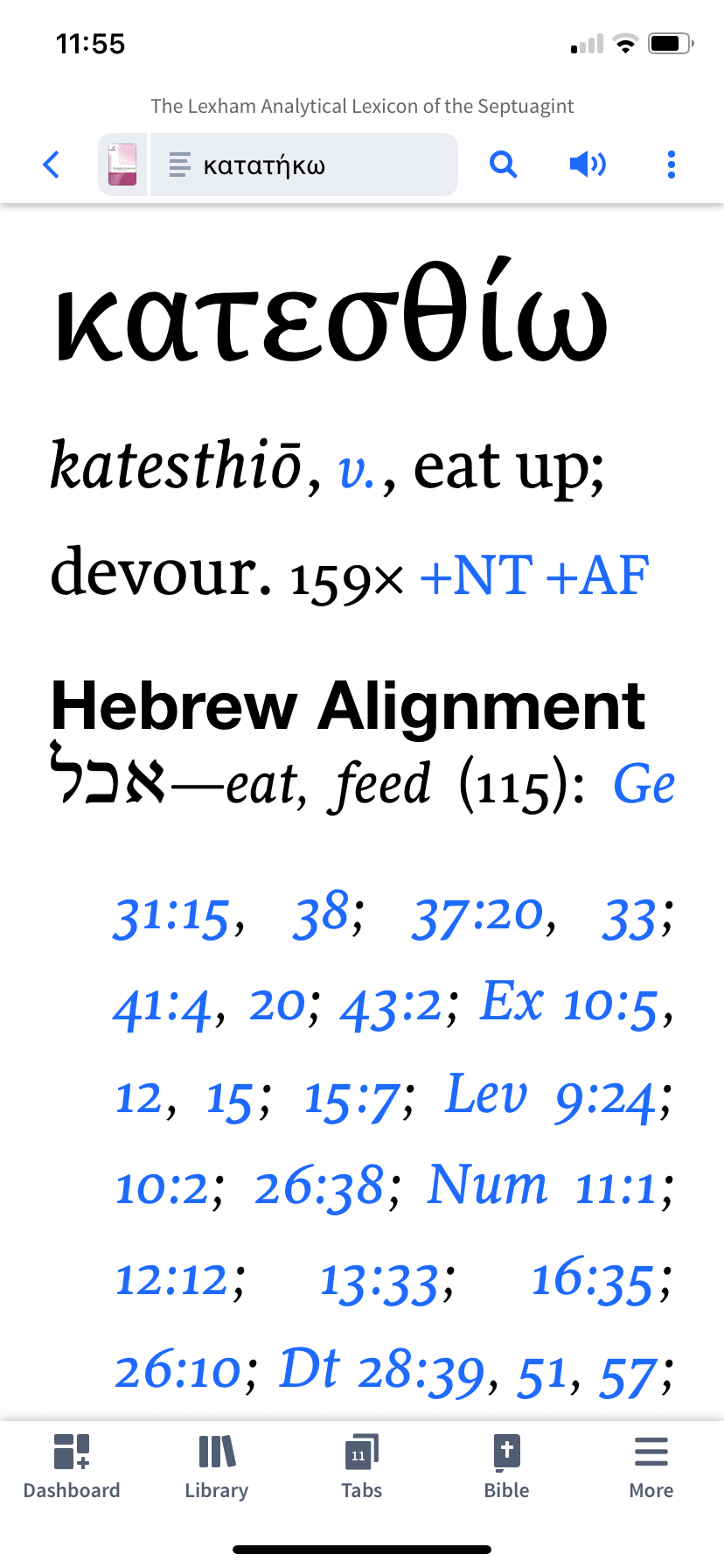
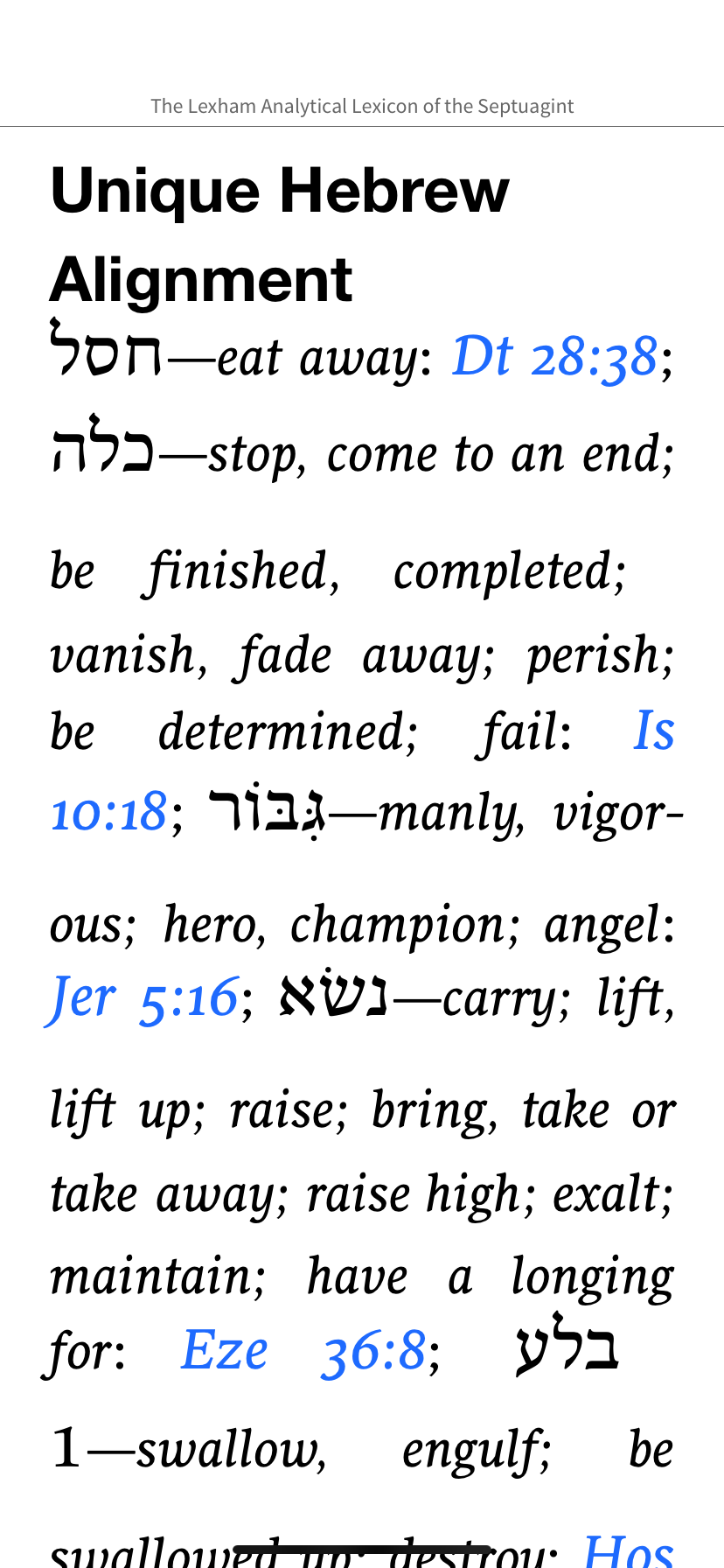
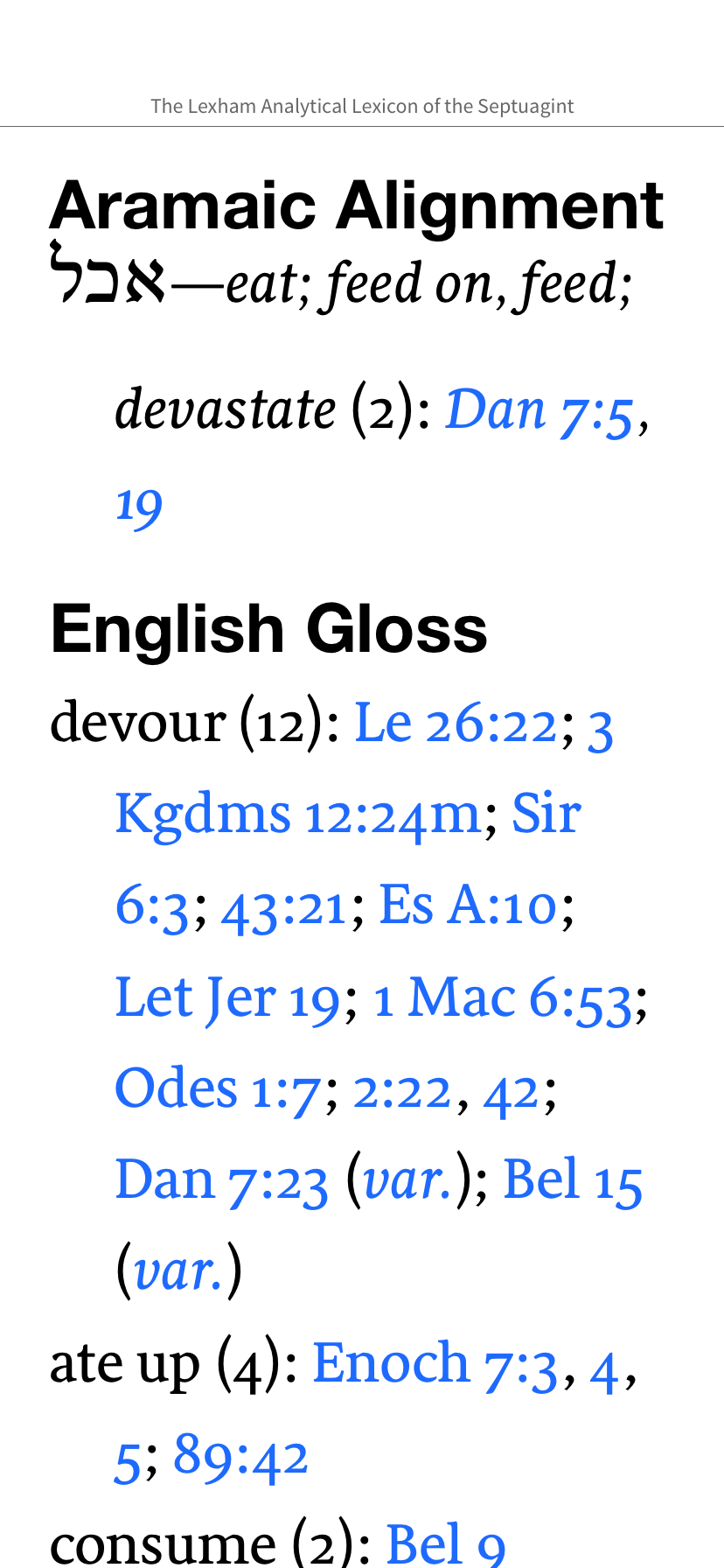
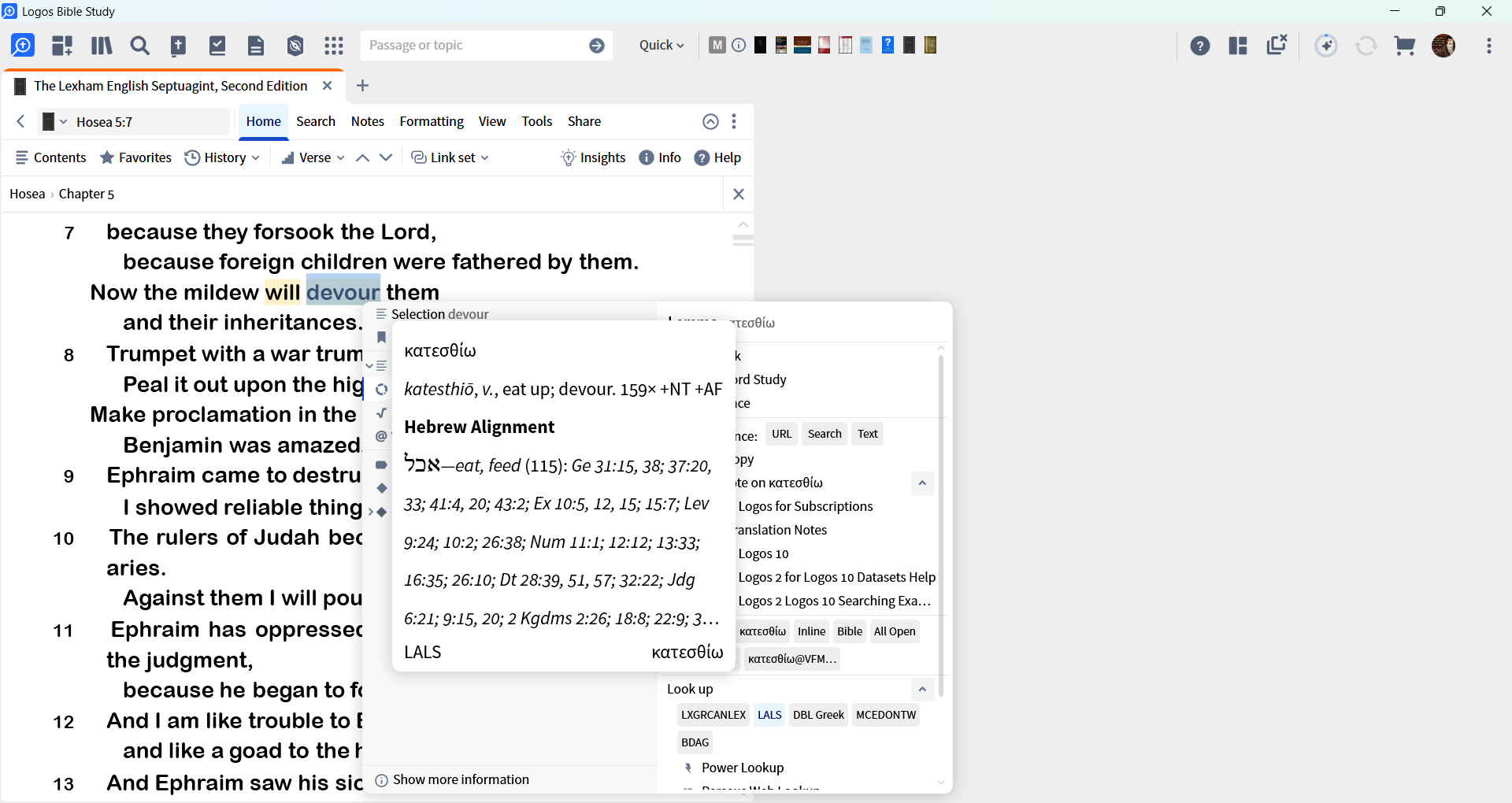
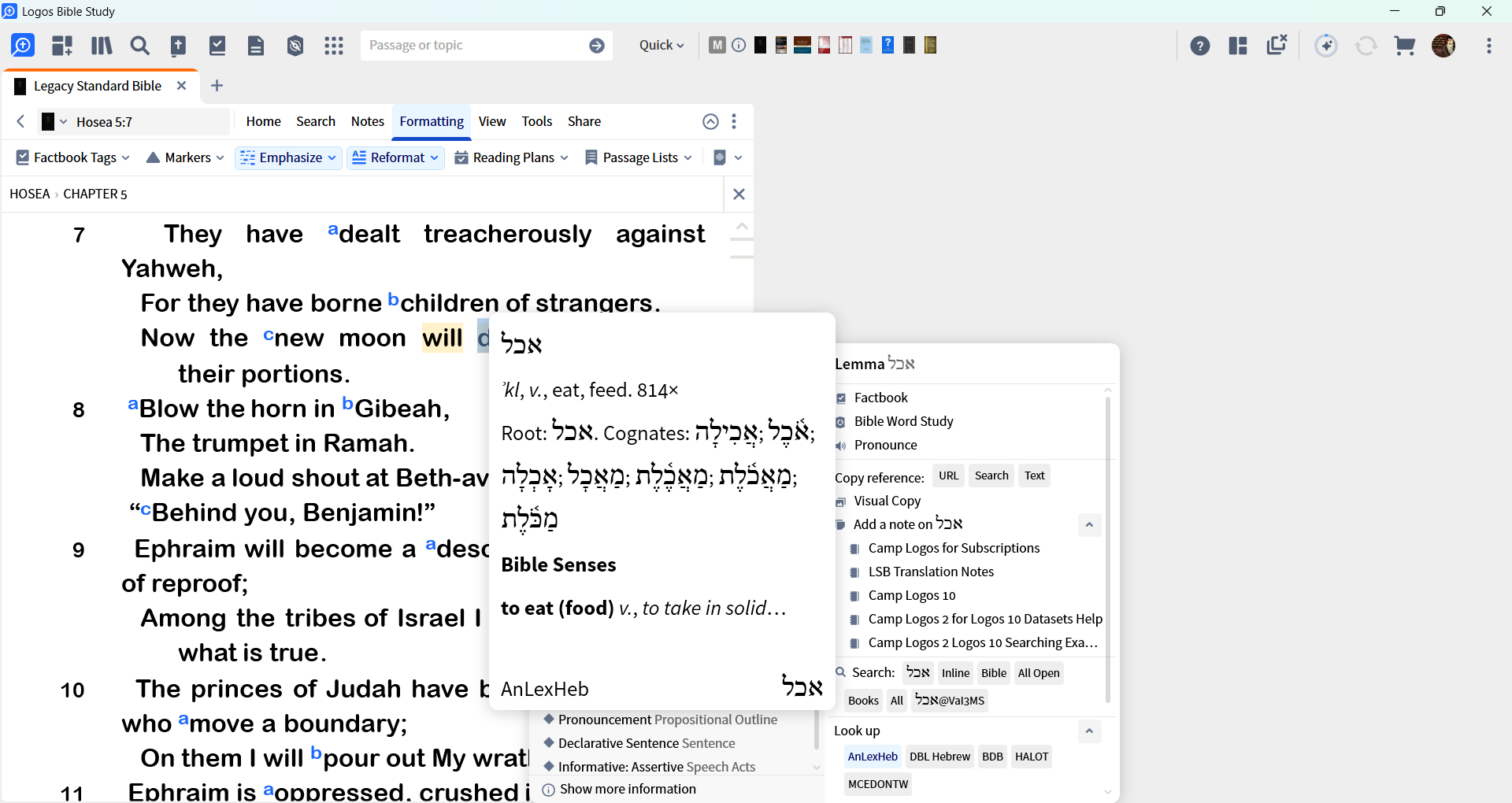
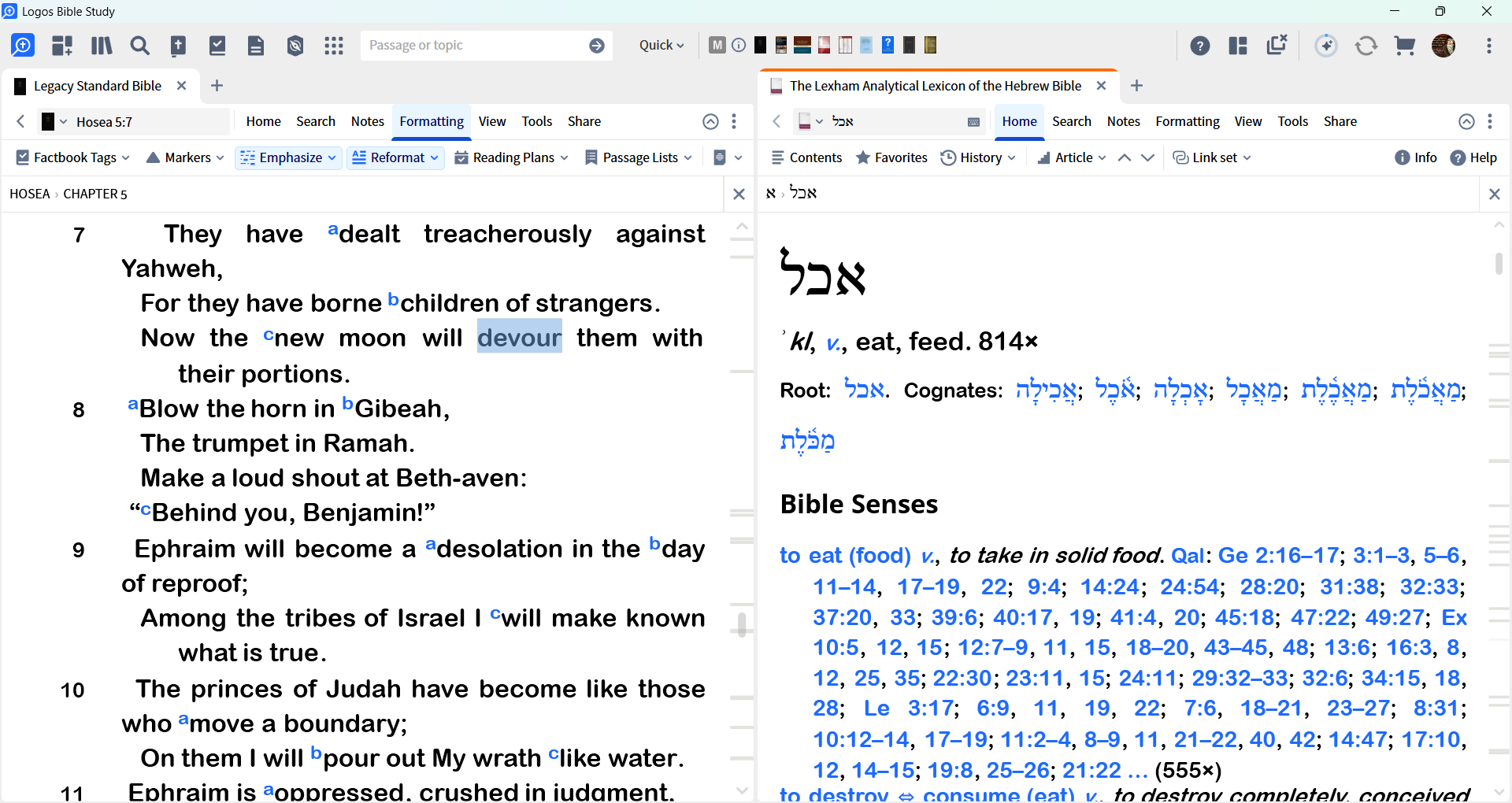
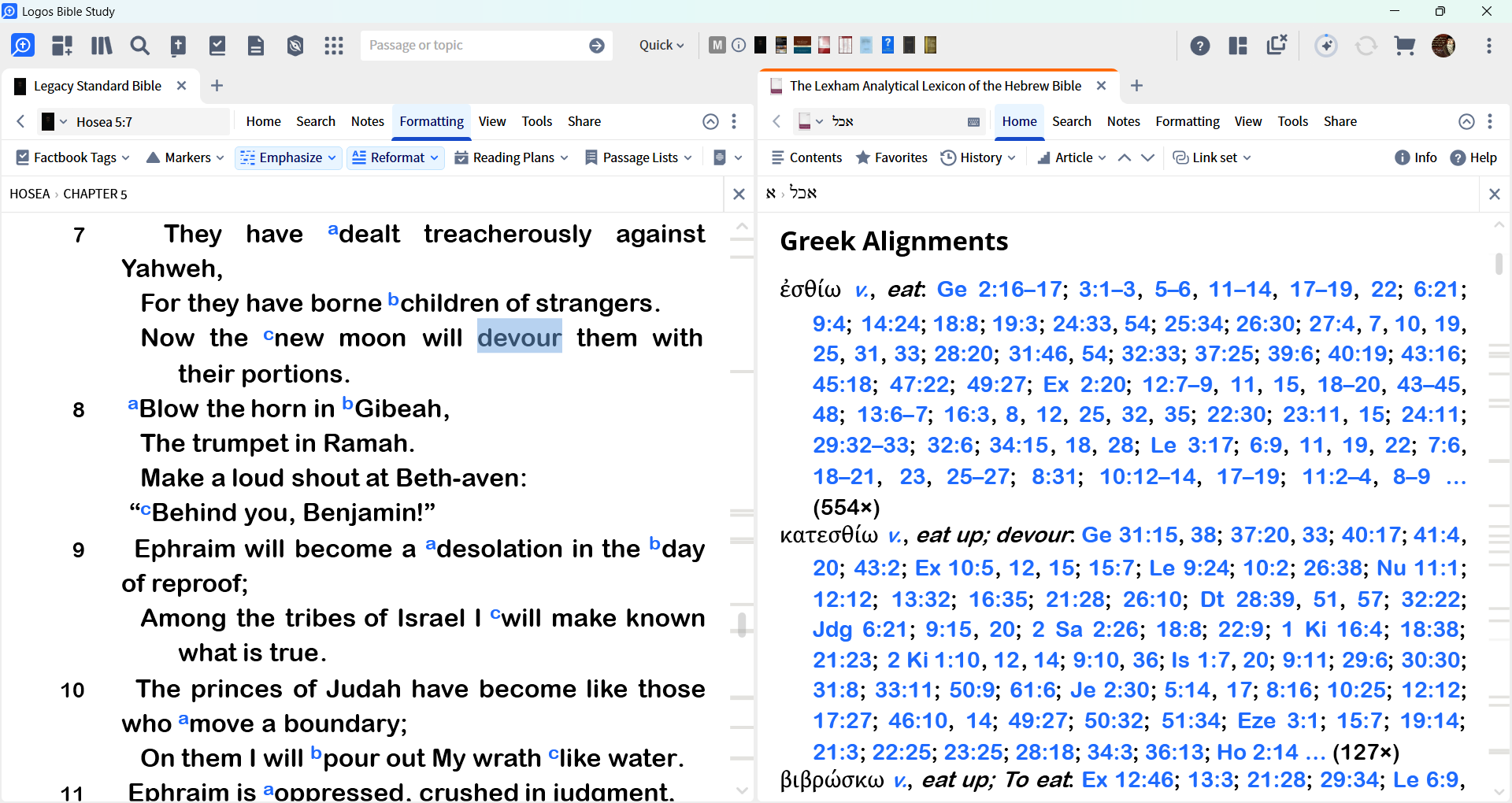
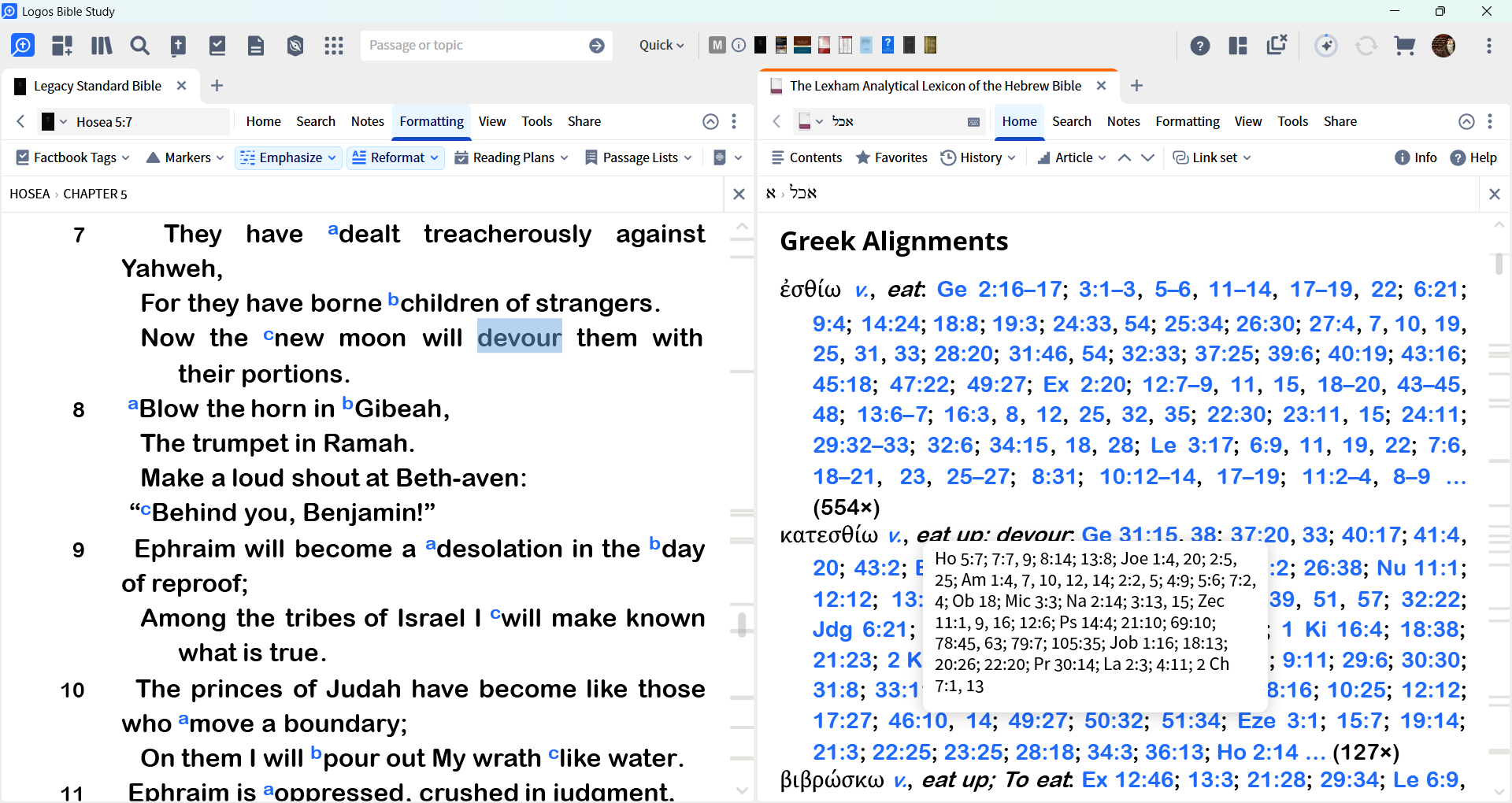
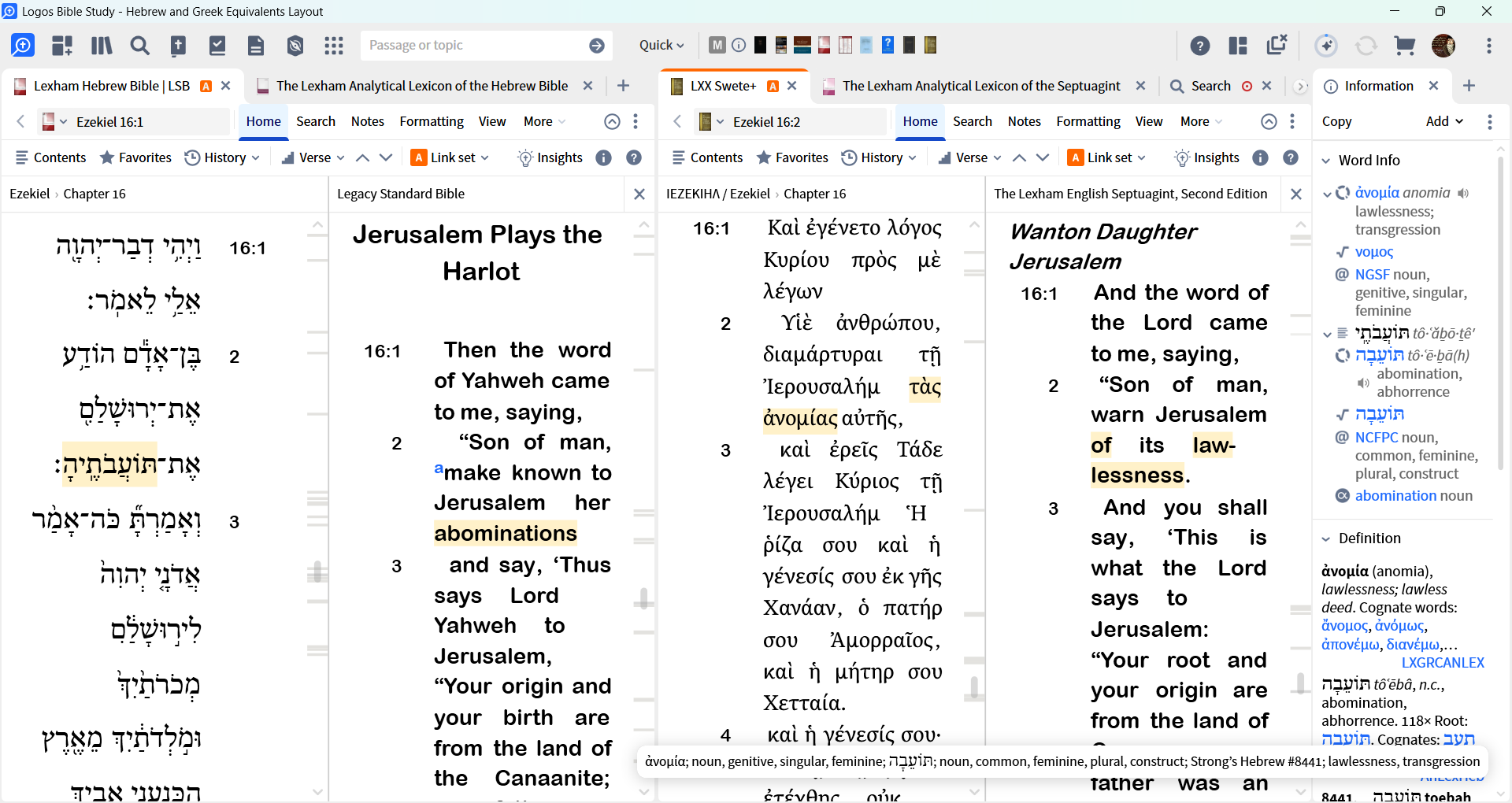
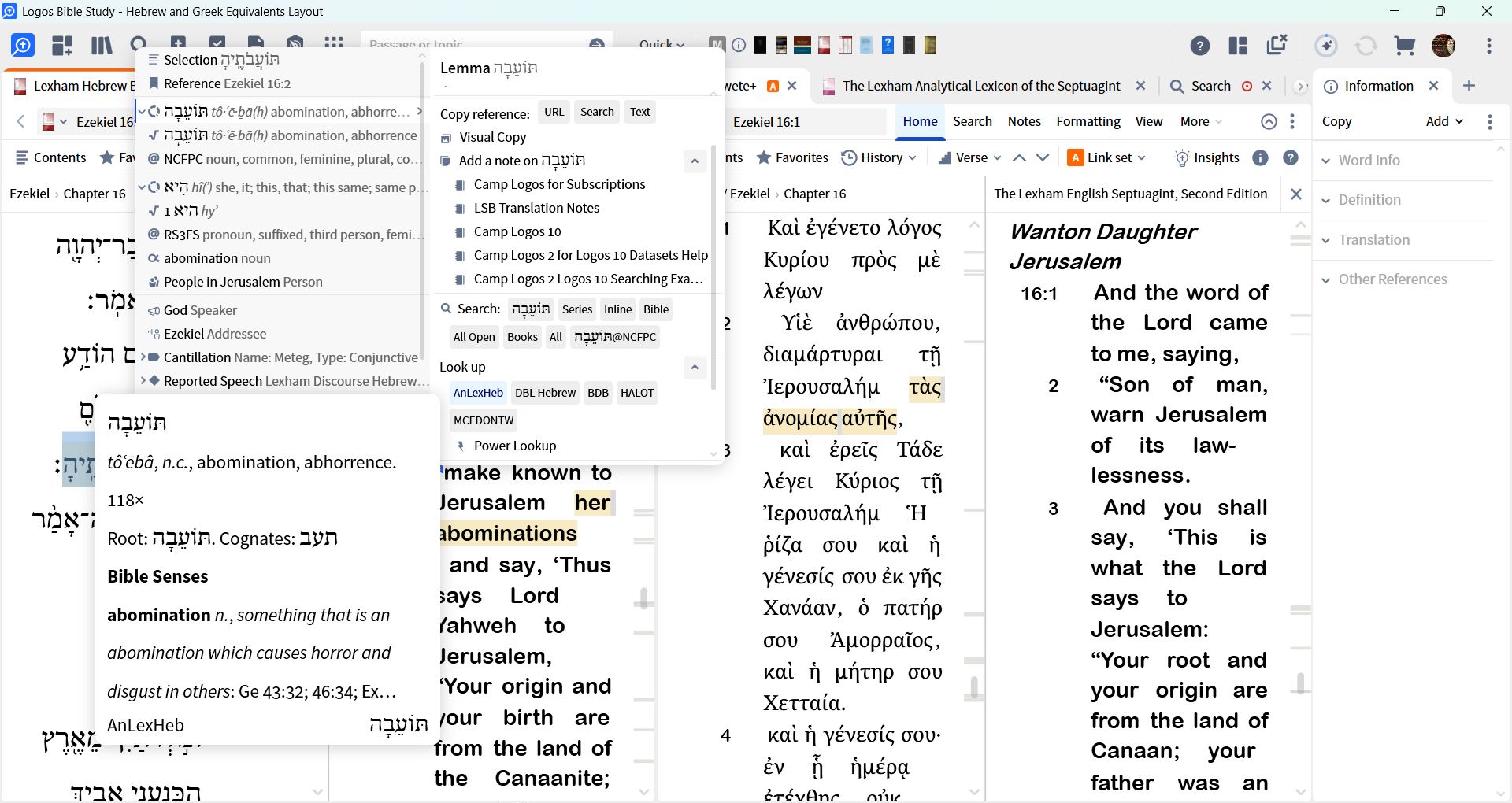
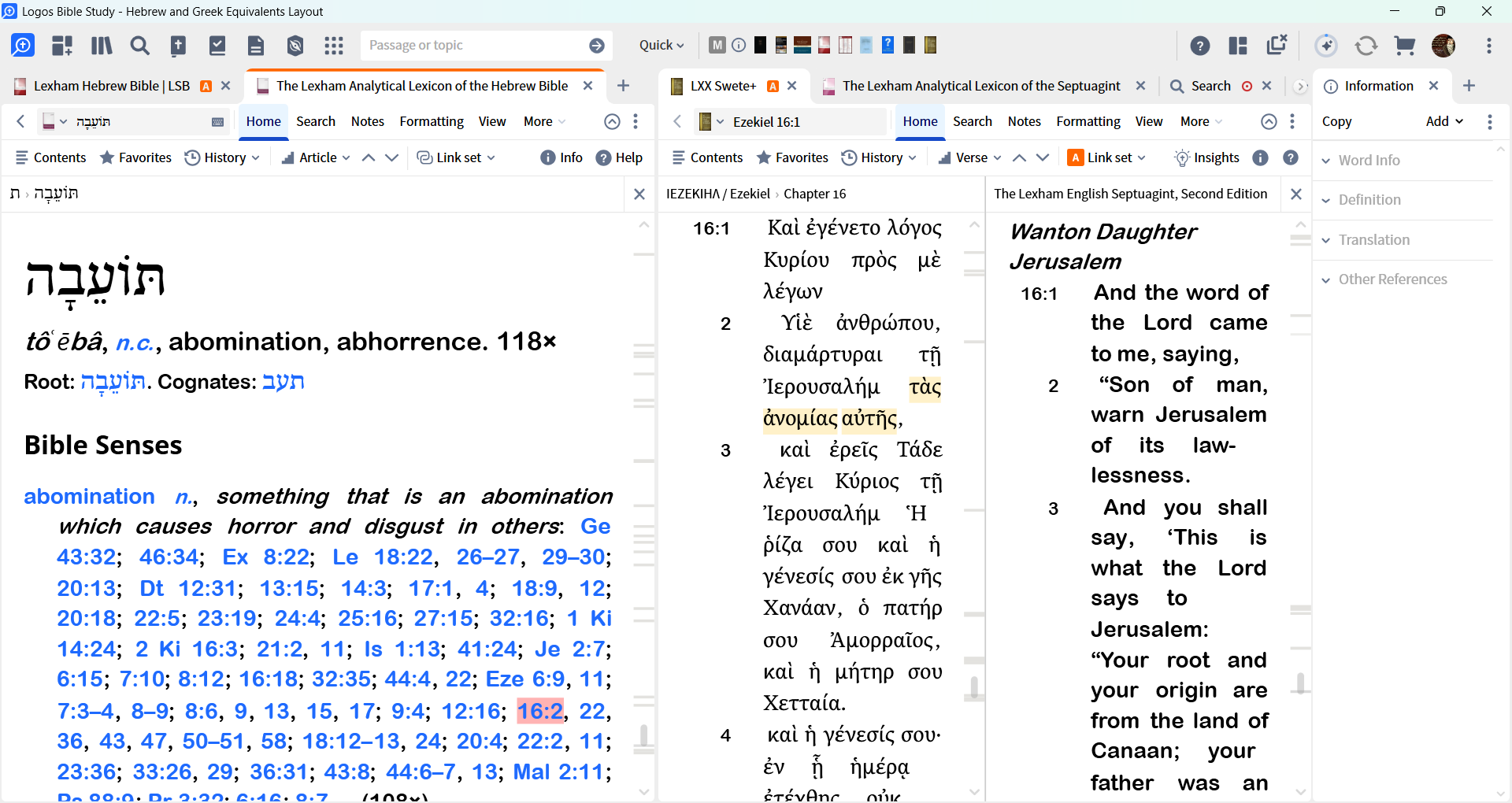
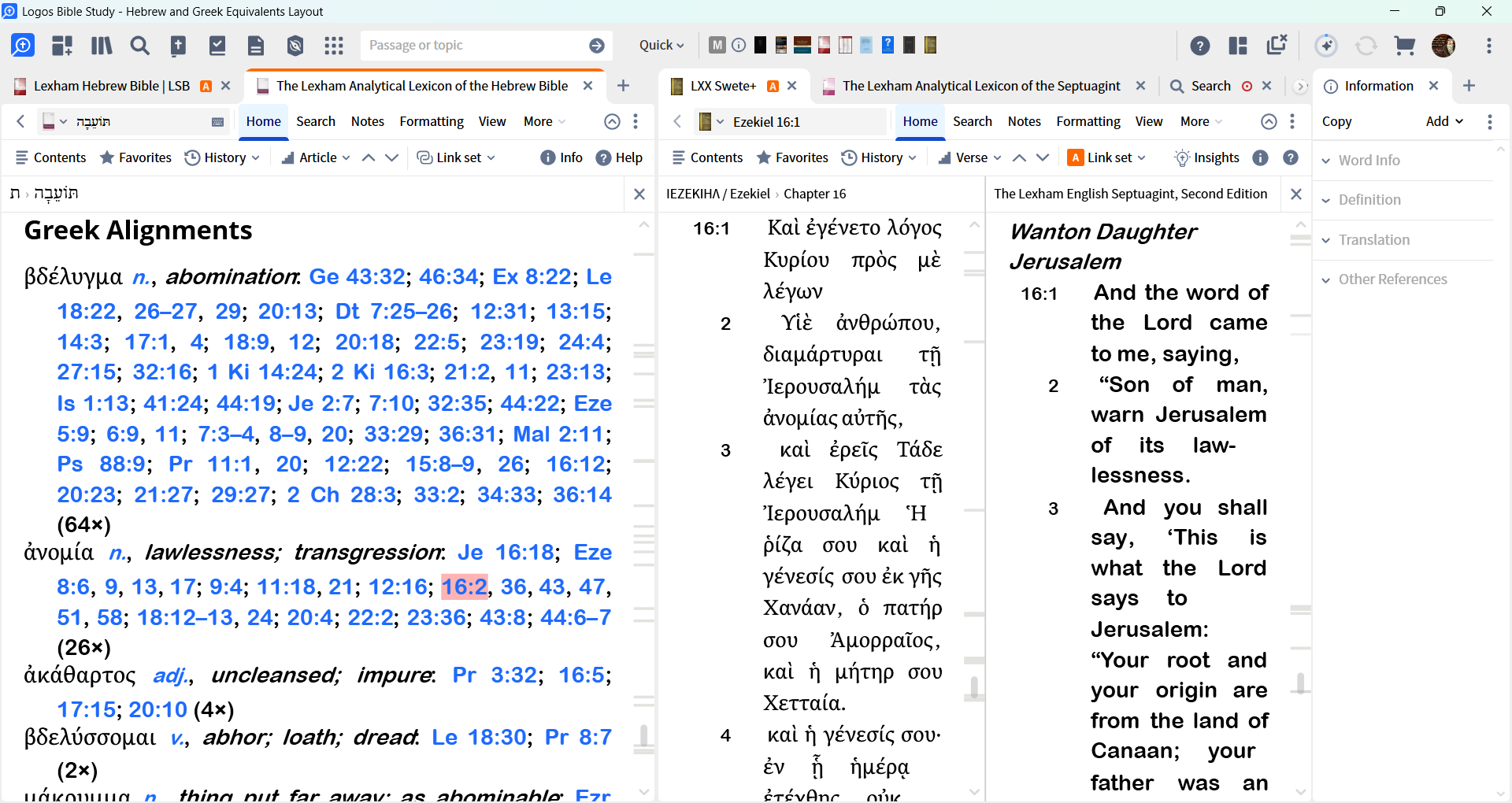
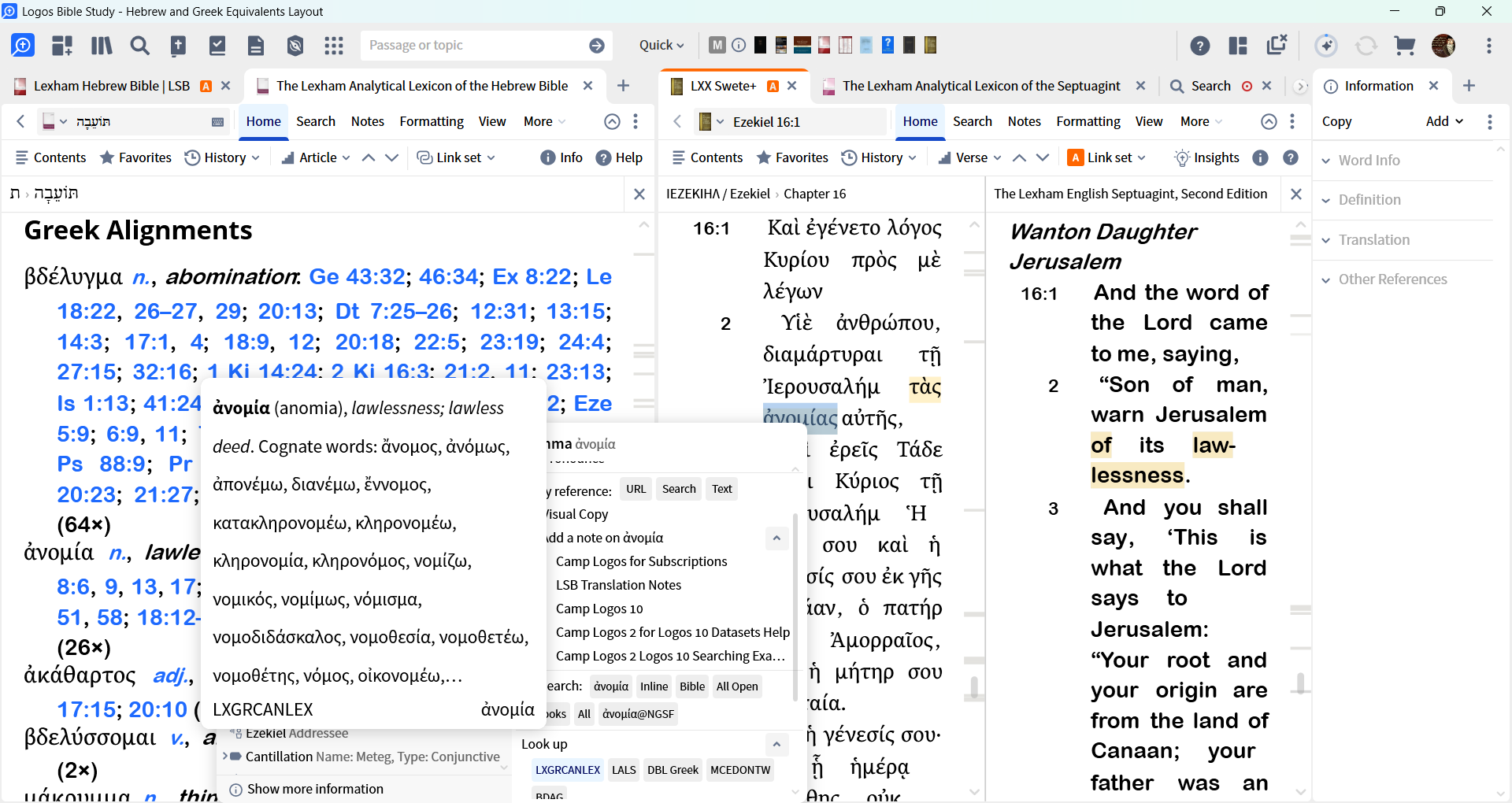
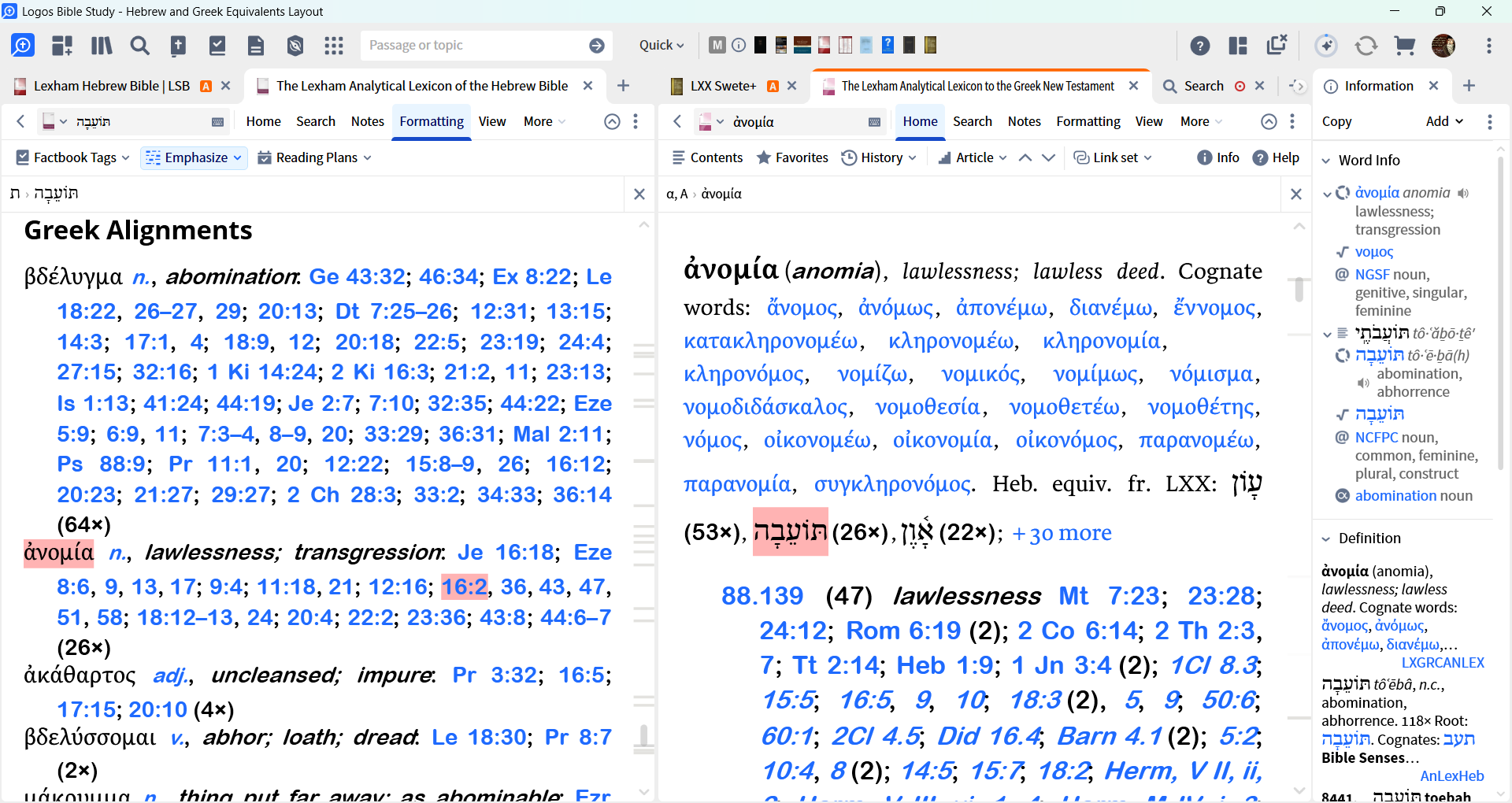
Mine is to take advantage of the Lexham analytical lexicons, prioritizing them (for this, the LXX one). A quick right click on the greek shows me the hebrew alignment, and associated OT verse usage in the Lookup section.
The analyticals have the advantage of working without needing the lemma tagged.
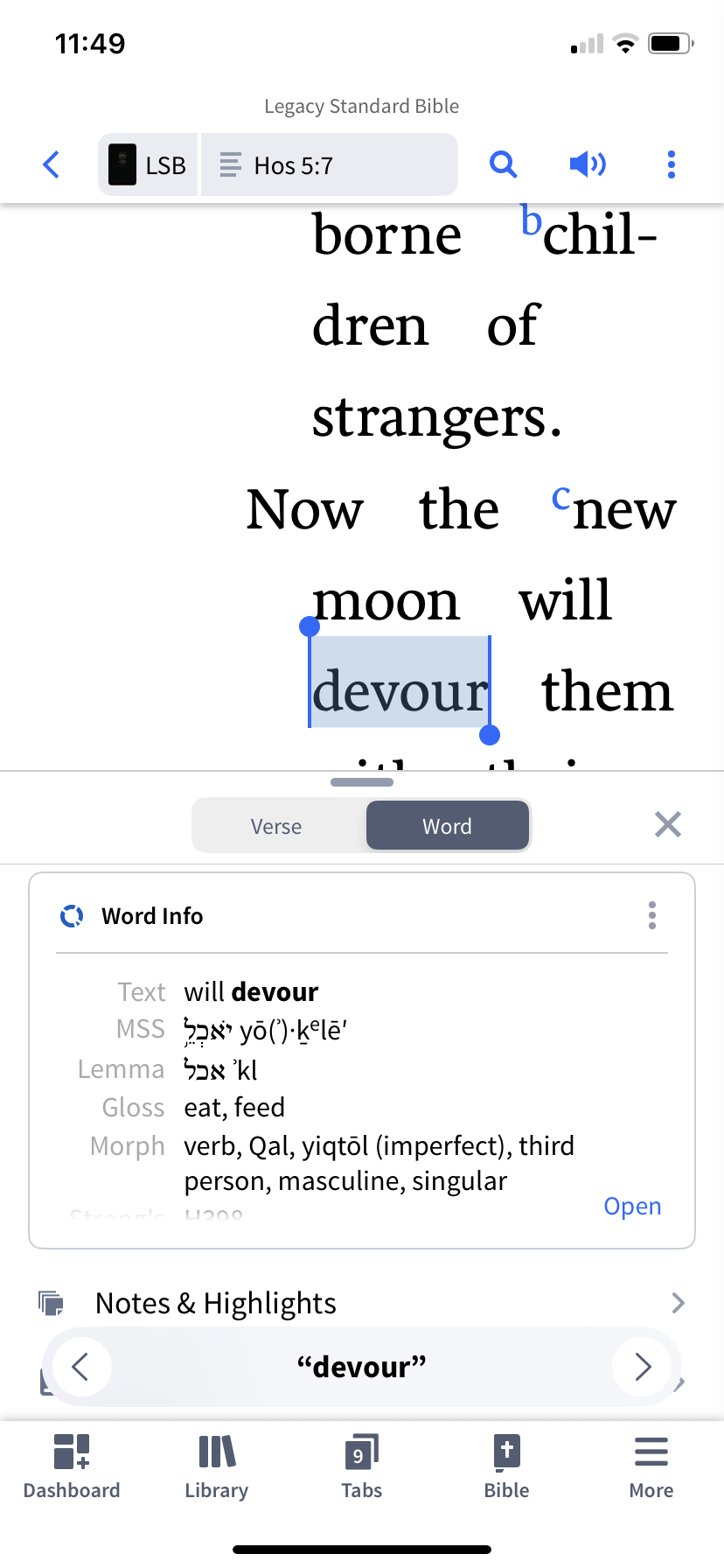
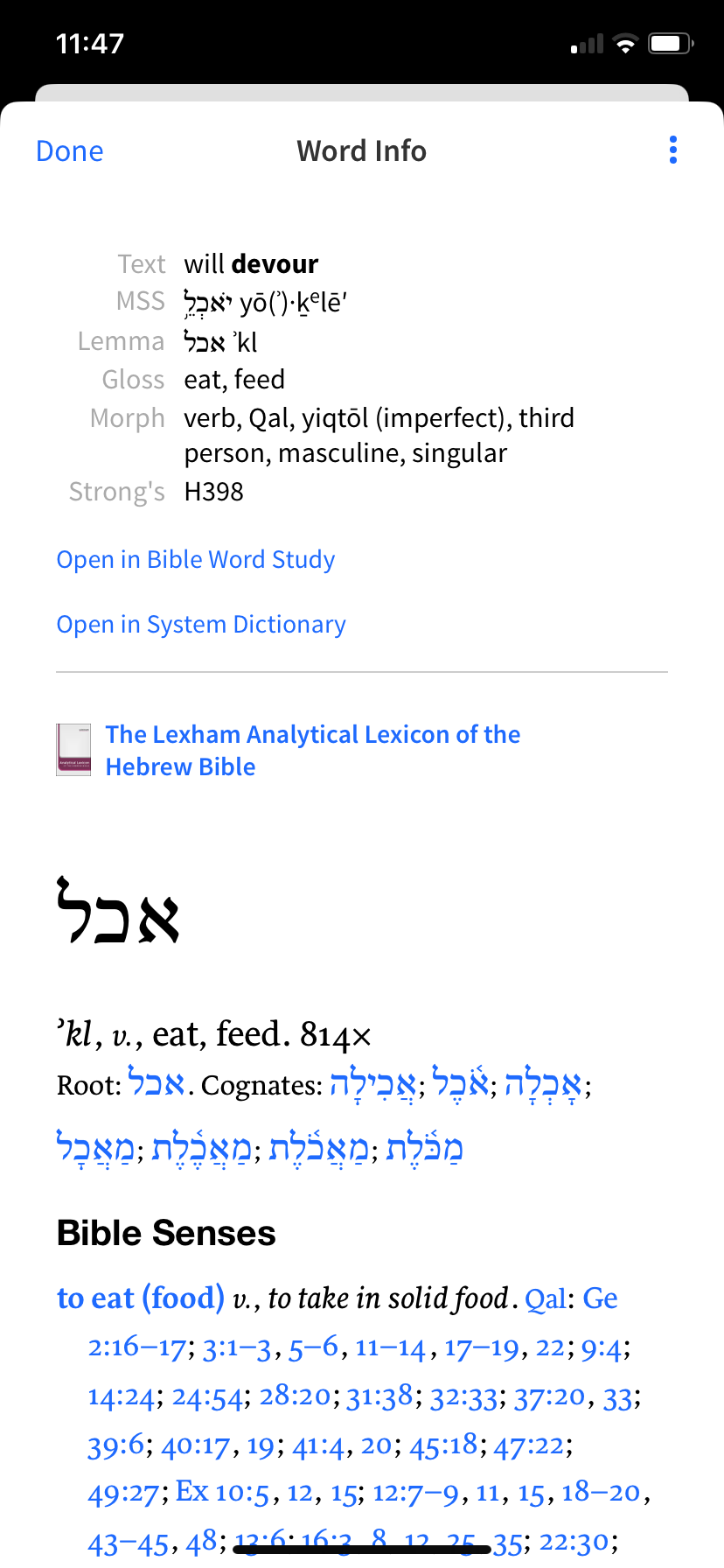
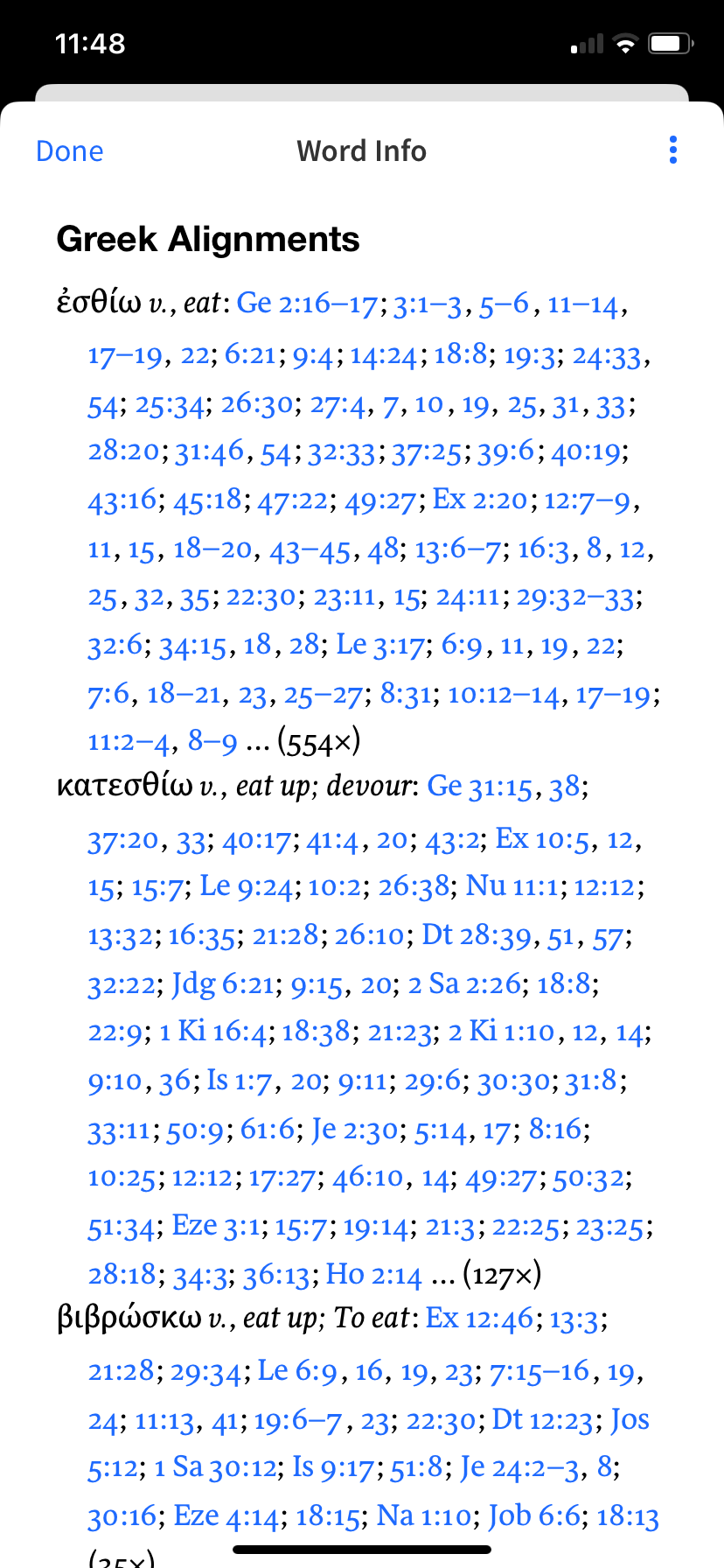
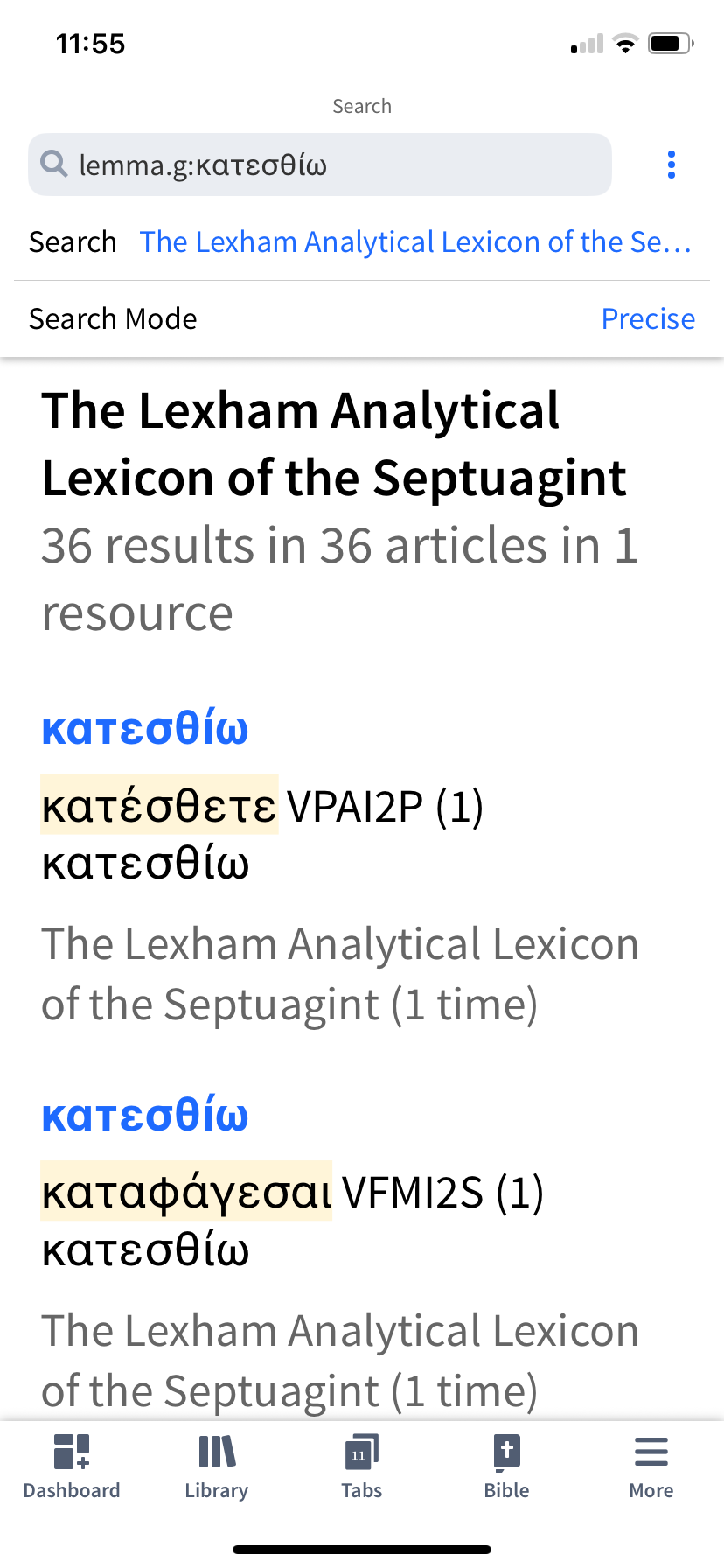
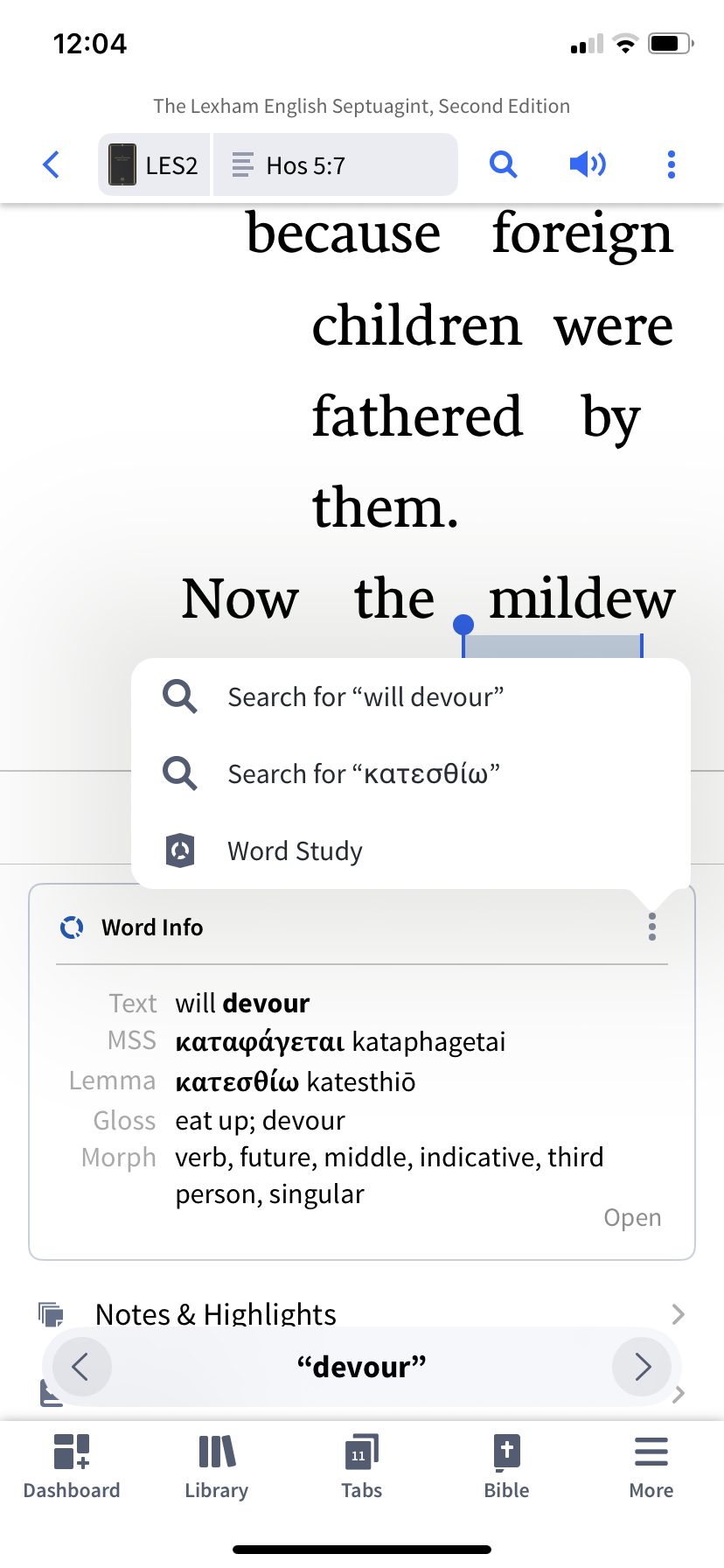
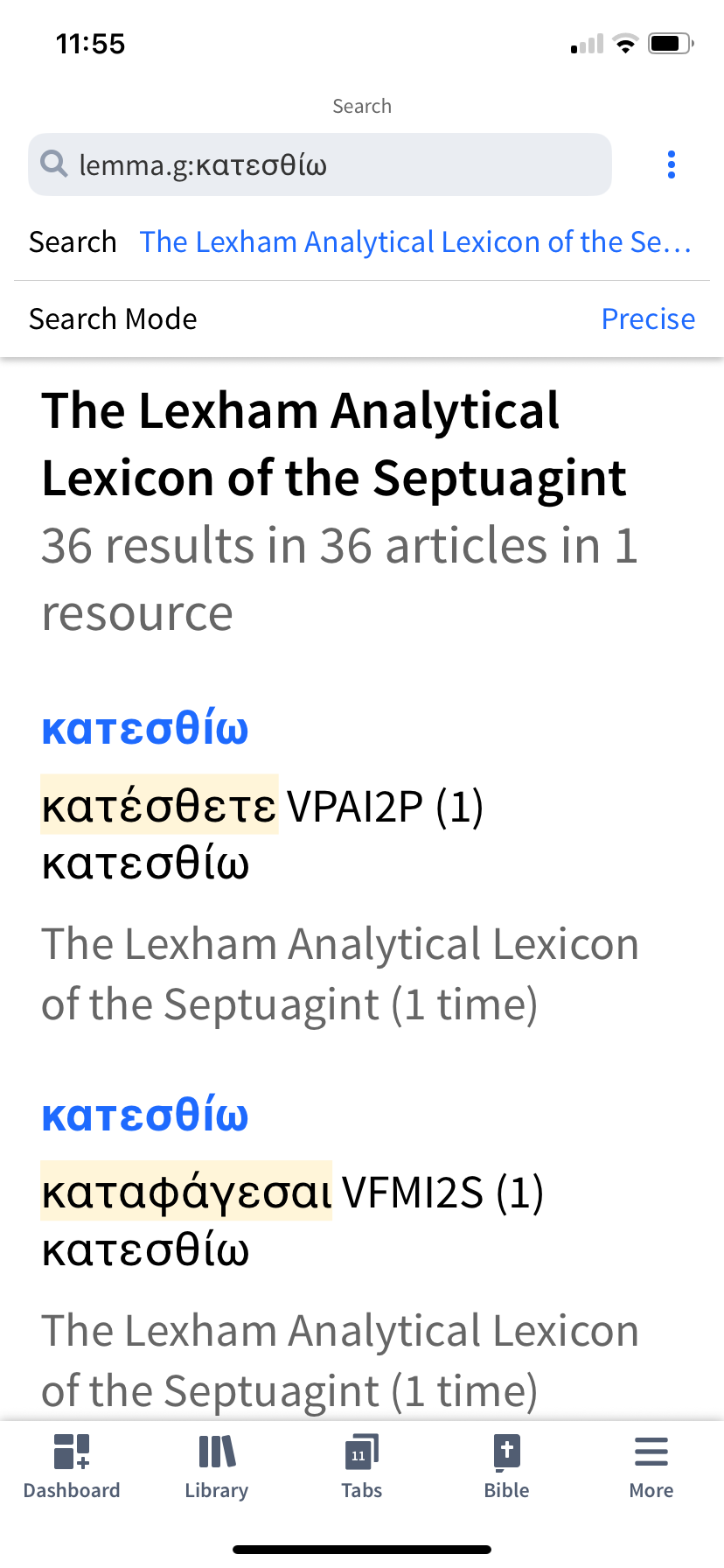
I’m not at my laptop now, but here is what you could do on the mobile app to search for Hebrew and Greek equivalents:
Hope this helps!
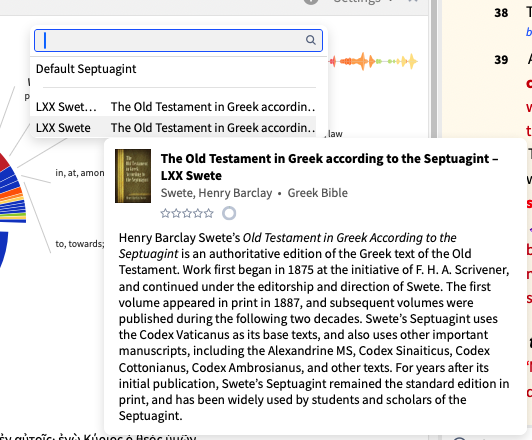
You can also use the Lexham English Septuagint to search for Greek lexemes in the LXX Analytical Lexicon:
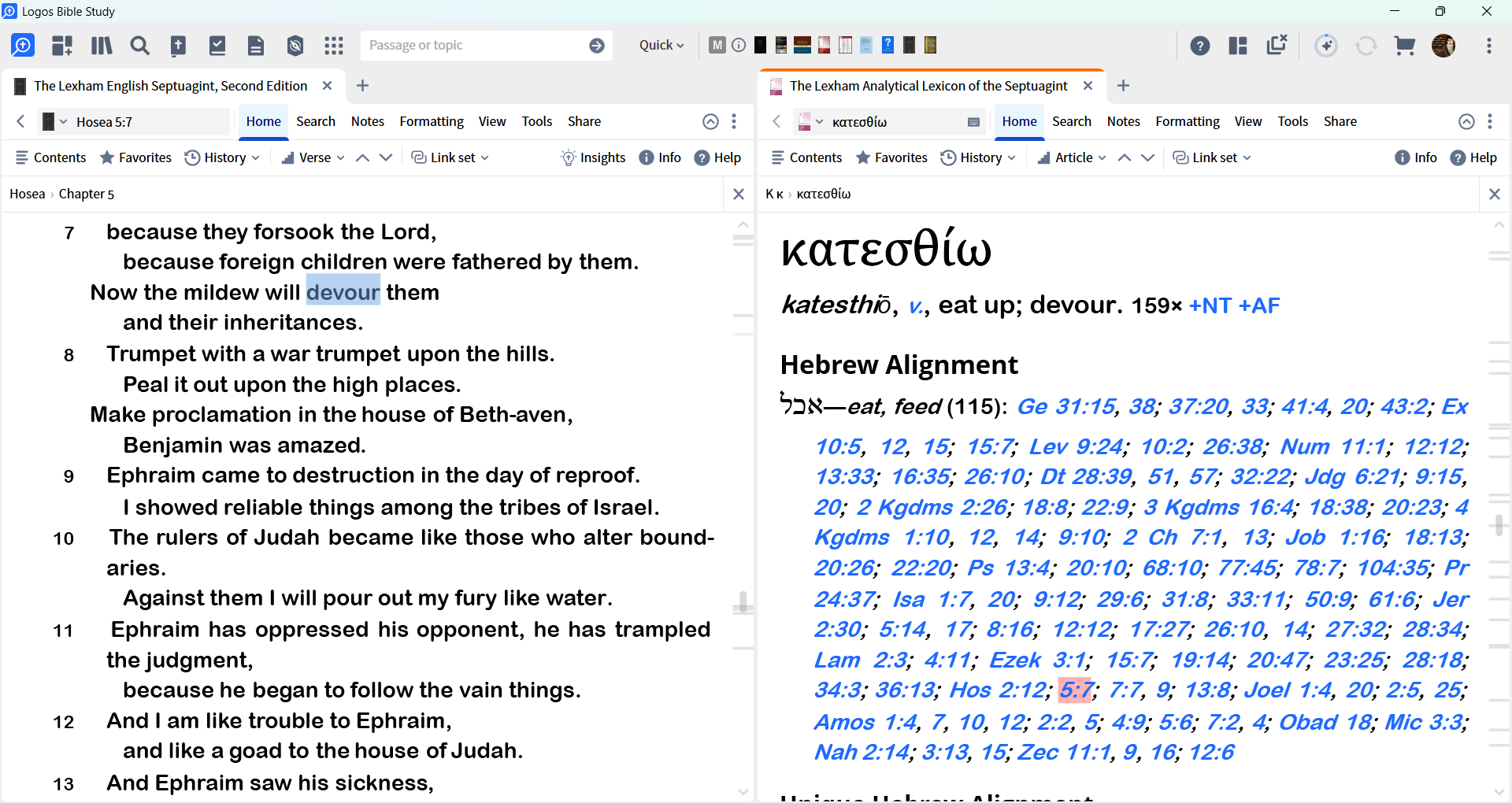
Here is how I check for Hebrew and Greek equivalents on the desktop:
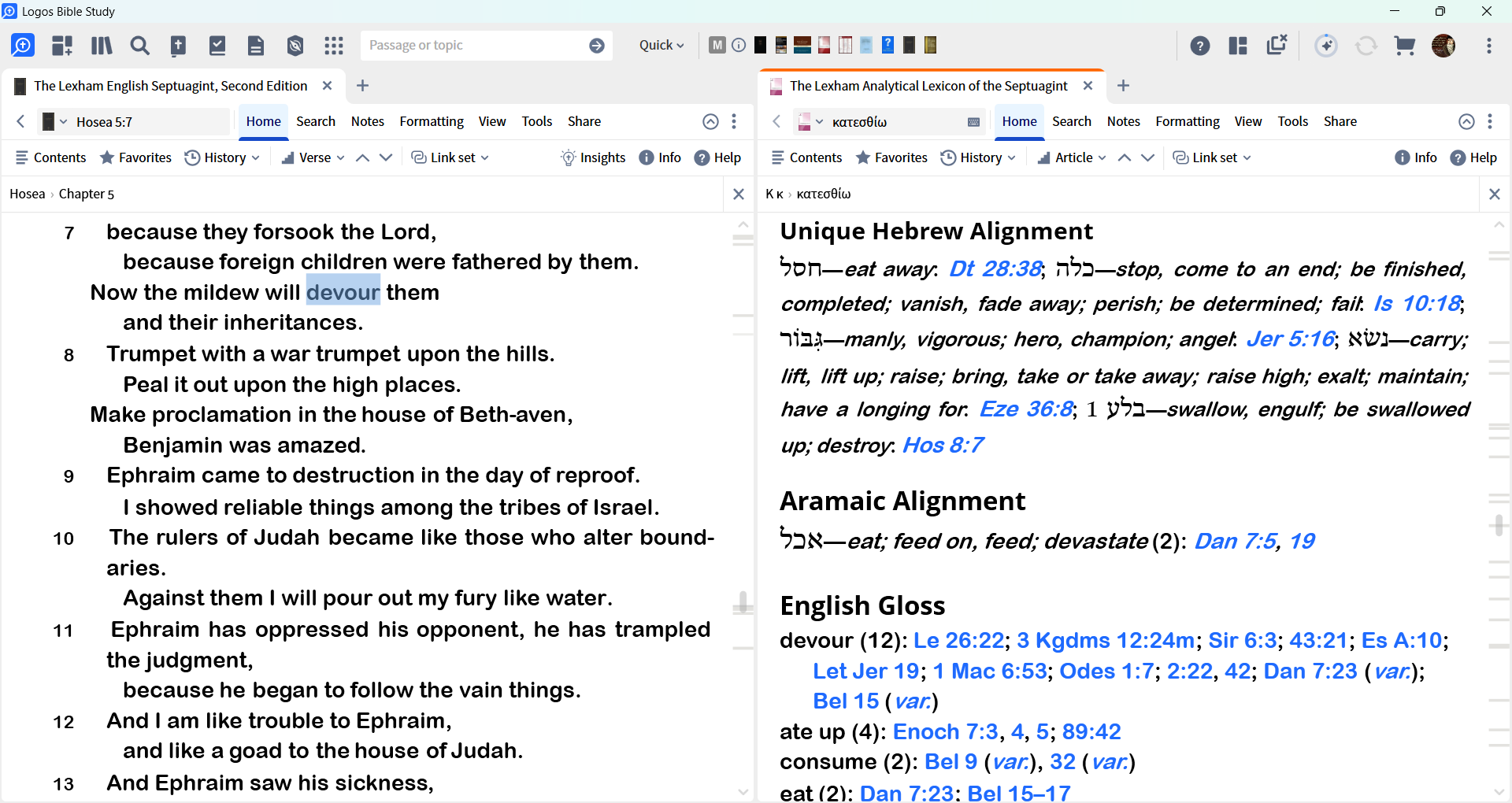
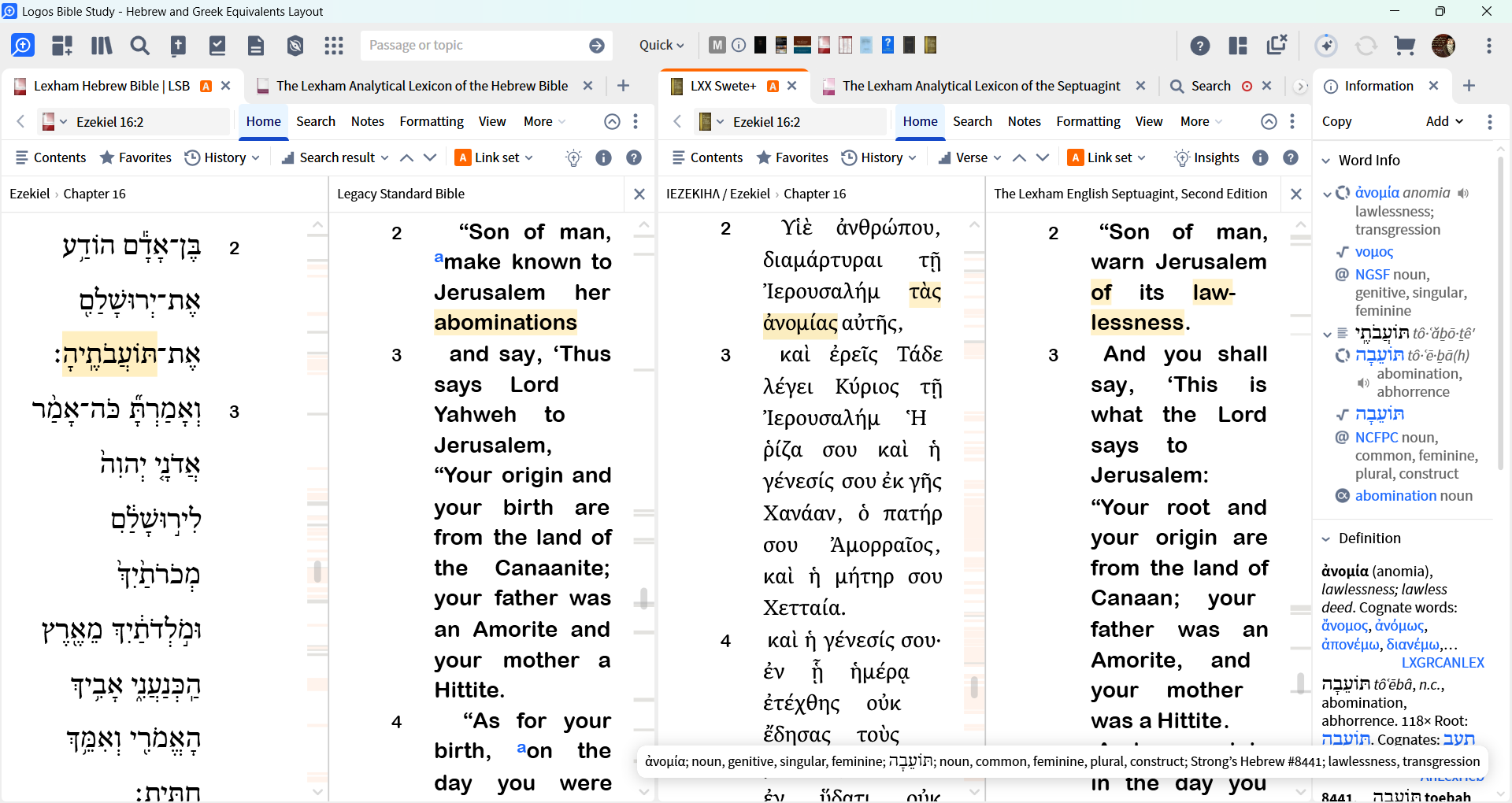
Here is the layout that I use to study Hebrew and Greek equivalents in the Old Testament:
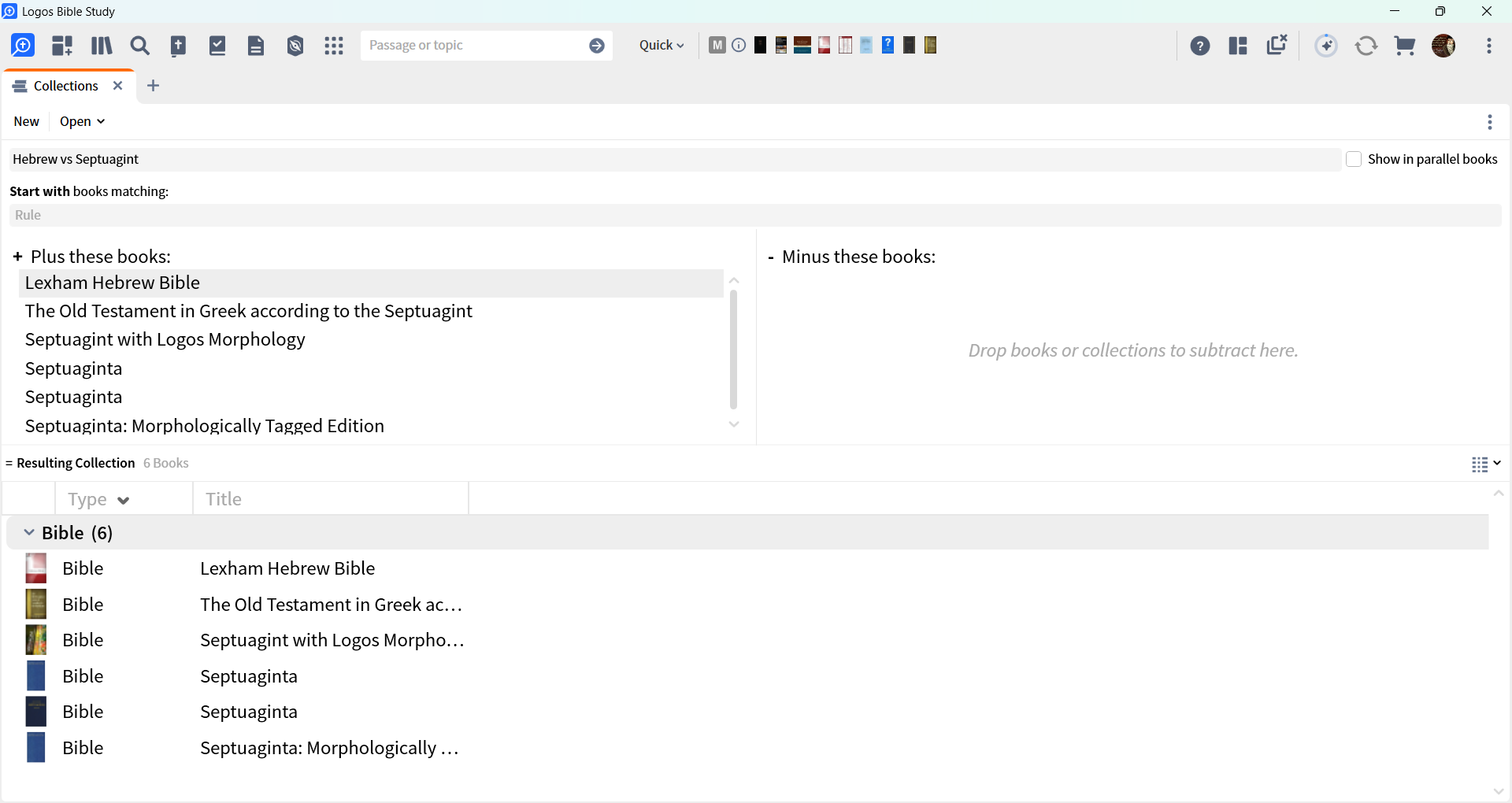
Here is another way that I search for Hebrew and Greek equivalents in the Old Testament:
3.Then use the cross highlighting feature to find the equivalents:
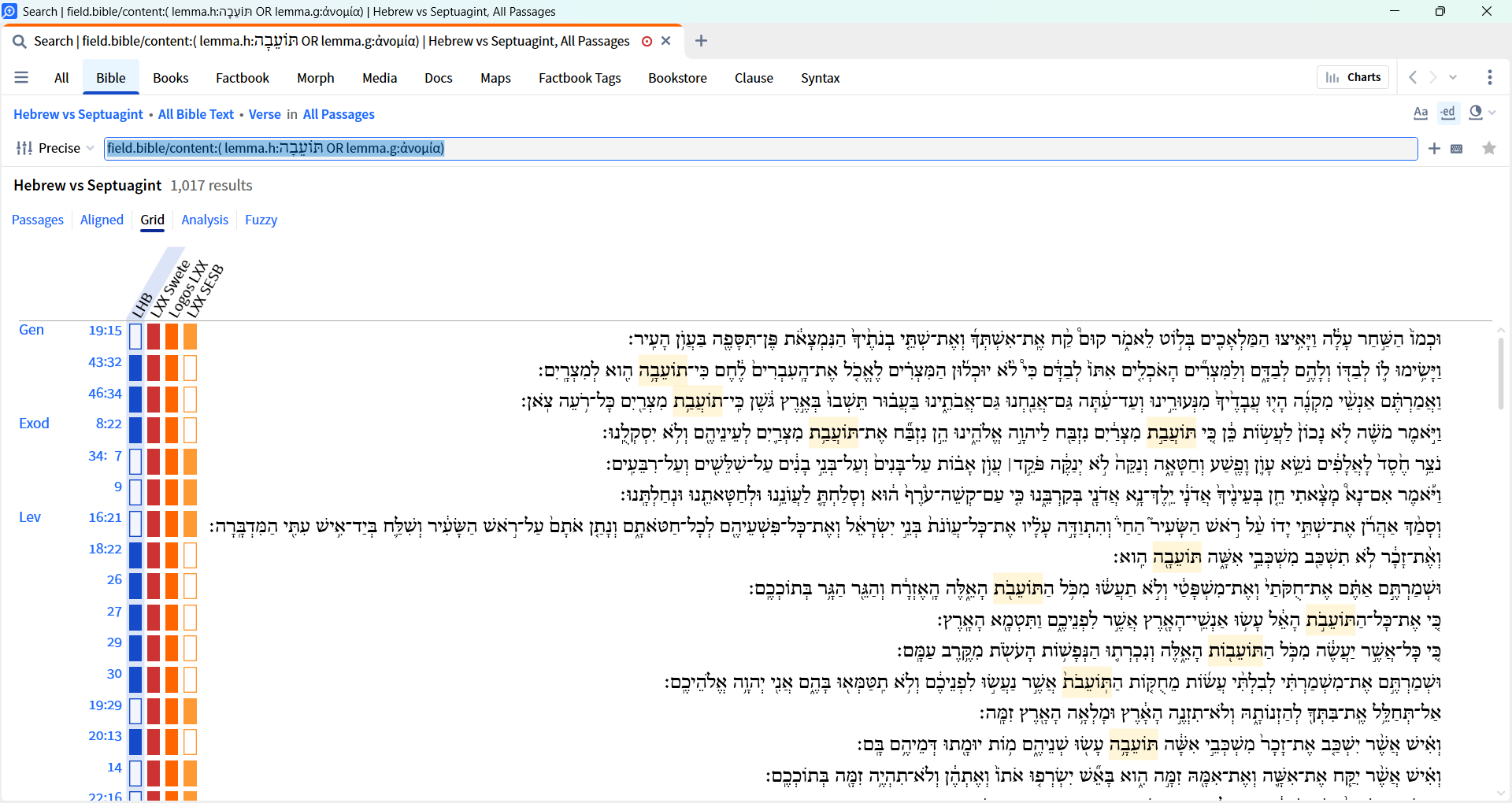
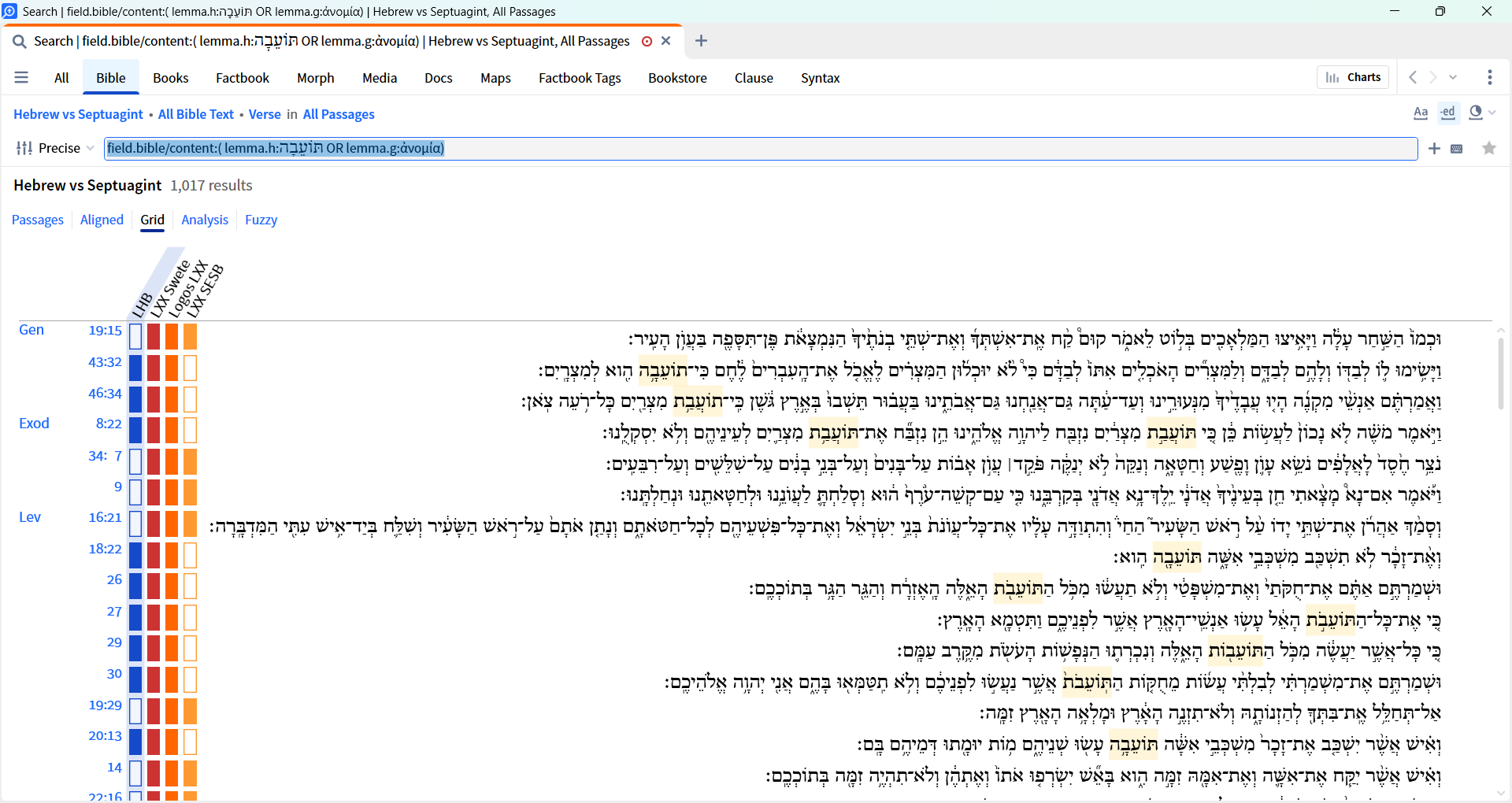
4. Then do a field/content Bible search in your created collection of Septuagints and Hebrew Bible using the Hebrew and Greek lemmas with the OR command and compare your results with the Grid analysis:
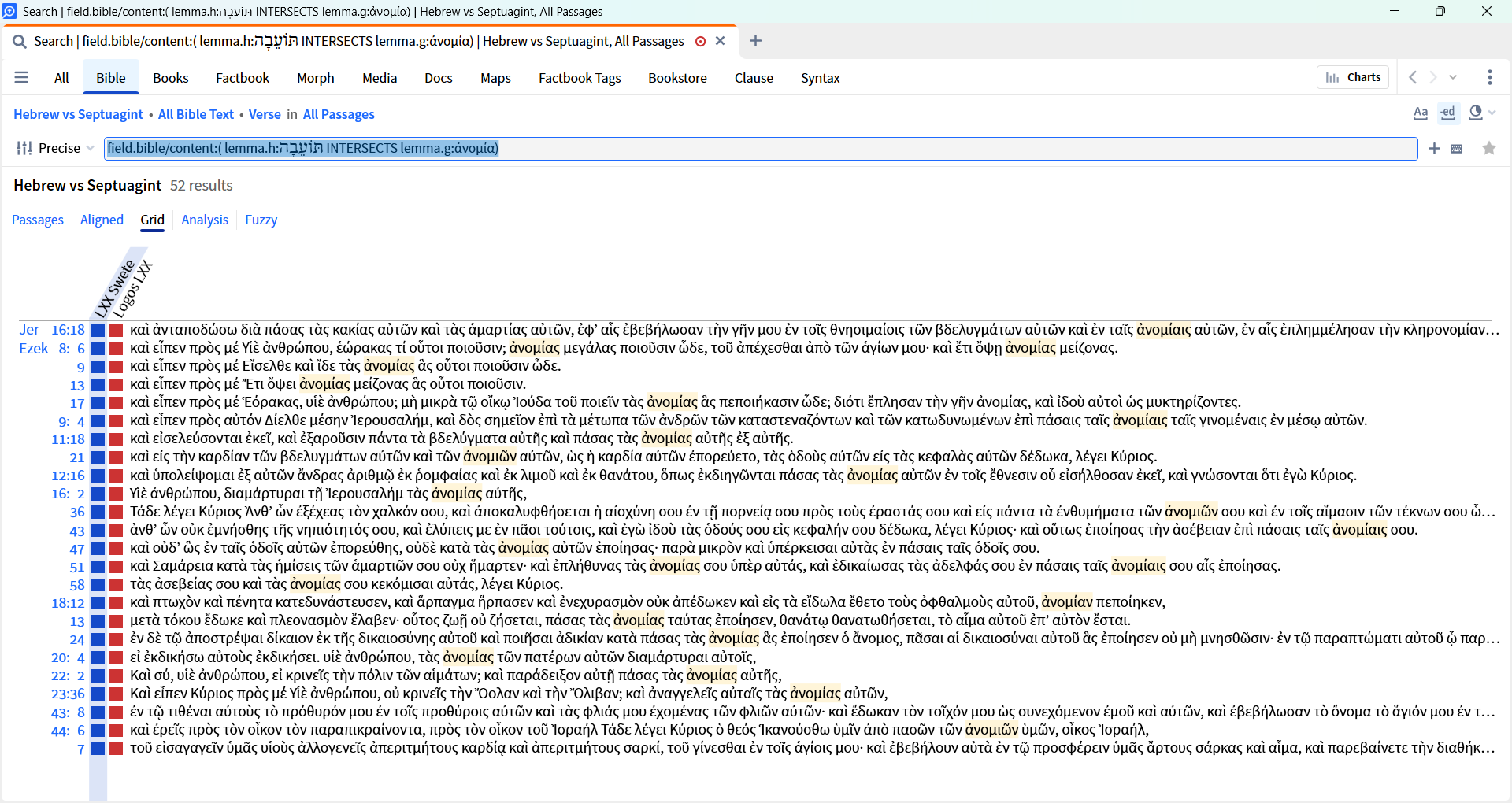
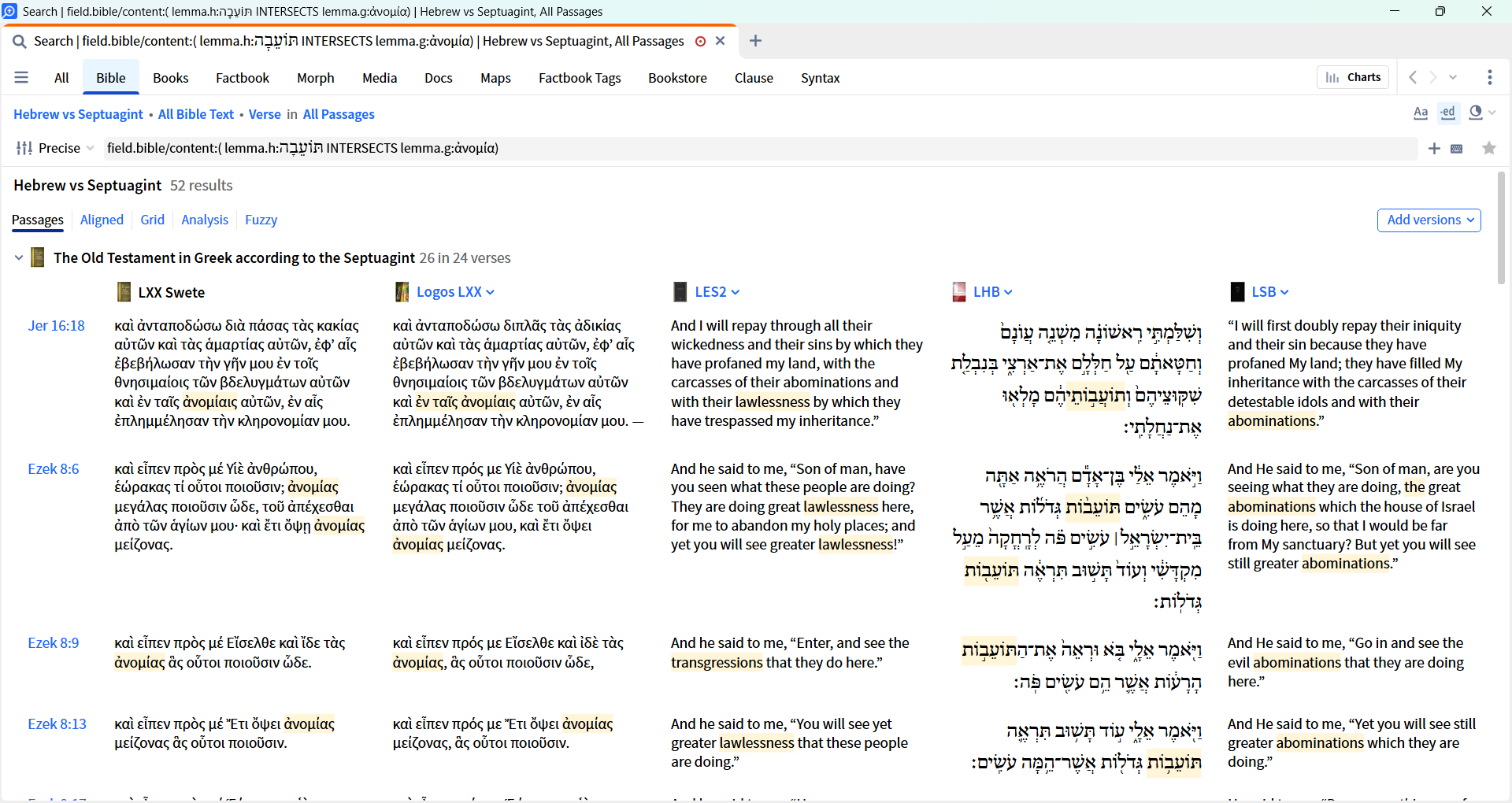
Using the field/content Bible search, you can use the INTERSECTS command to find the exact equivalents between the Hebrew and Greek lemmas in the Old Testament:
Context, Context, Context. There is generally no one to one equivalent between words in different languages. The semantic ranges of meaning may overlap but will not likely ever be an exact match. The previous suggestions will be helpful in your quest but just don’t expect what you find in one situation to mean that you can apply that equivalent word relationship in every case.
Hi @Bob Diebel,
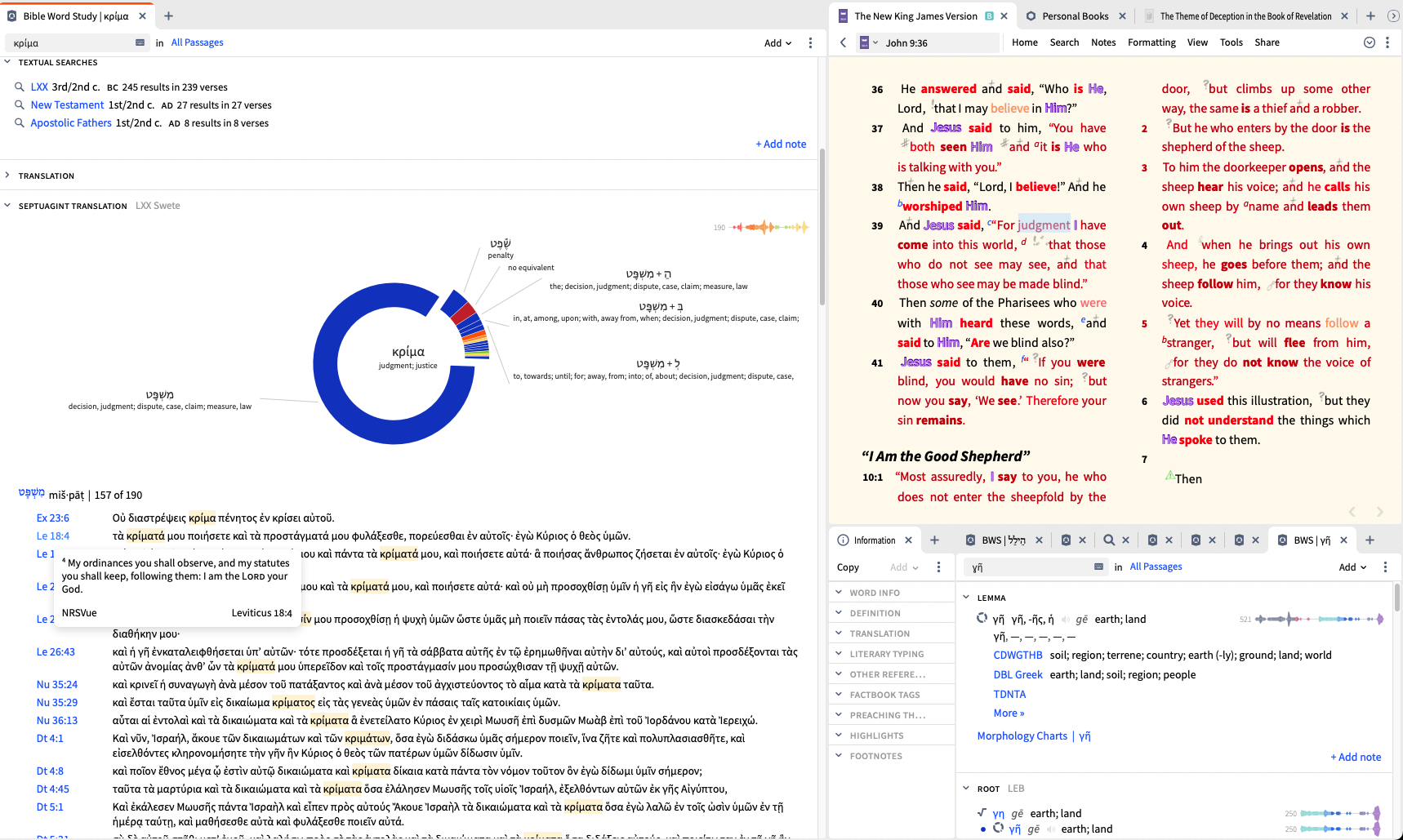
If you like visual aid more this would be a good tool here in the Bible Word Study Panel at Septuagint Translation section.
I learn this from BibleProject & love it as they explained that due to the NT Greek being used for those who read the Septuagint in their era, then it would make sense that they use similar style of Greek back then to write & convey the message in NT. So that would mean that the semantic ranges of meaning will make more sense as the NT authors likes to refer back or quote from the OT. That's just what I learned with some sense of agreement logically & most comfortable with though, there might be better ways out there. Hope it helps !
Steps :
Right click a word → Bible Word Study → Scroll to Septuagint Translation section.
Resources needed : (Might get some better prices according to your dynamic price package)
https://www.logos.com/product/10494/the-old-testament-in-greek-according-to-the-septuagint
https://www.logos.com/product/25576/the-old-testament-in-greek-according-to-the-septuagint?queryId=2be3ba5b056cf1f262aac004c8d66c8b
https://www.logos.com/product/27514/the-old-testament-in-greek-according-to-the-septuagint?queryId=2be3ba5b056cf1f262aac004c8d66c8b
Hmm…not sure what's wrong with my post, but it needs approval for the latest information to be updated.
The previous reply was missing one more resource, here you go : https://www.logos.com/product/10494/the-old-testament-in-greek-according-to-the-septuagint
There is a all-in-one resource for this in Logos: https://www.logos.com/product/2209/the-parallel-aligned-hebrew-aramaic-and-greek-texts-of-jewish-scripture?queryId=61ab8ed99eb15f9fe40dfbdab96720d2
Available Now
Build your biblical library with a new trusted commentary or resource every month. Yours to keep forever.
I was wanting to create a Exegetical Fallacy cheat sheet that I could carry with me. There are a lot of books and sermons etc. contain these fallacies. A lot of people don’t have ability to learn greek or have access to or can afford devices. Error occur from not being able to use resources properly or out of date ones. My…
Can anyone tell me if CHALOT has the reformat option available the way HALOT and BDAG do?
I have a new computer. When I reinstalled Logos, the translation glosses appearing upon hovering over Greek words in Nestle Aland 28 no longer show up. How do I make the translation glosses appear again?
Up until today, when I click on this Lectionary card on my home page, titled "Catholic Daily Readings": it would open a lectionary that in the left panel had Catholic DailyReadings, Roman Missal, and Lectionary for Mass: For Use in the Dioceses of the United States of America, Second Typical Edition, Volumes I–IV: But…
How are notebooks sorted in the Notes tool? I use to think they were alphabetical but they are not - look at this list. Is there a setting for this?