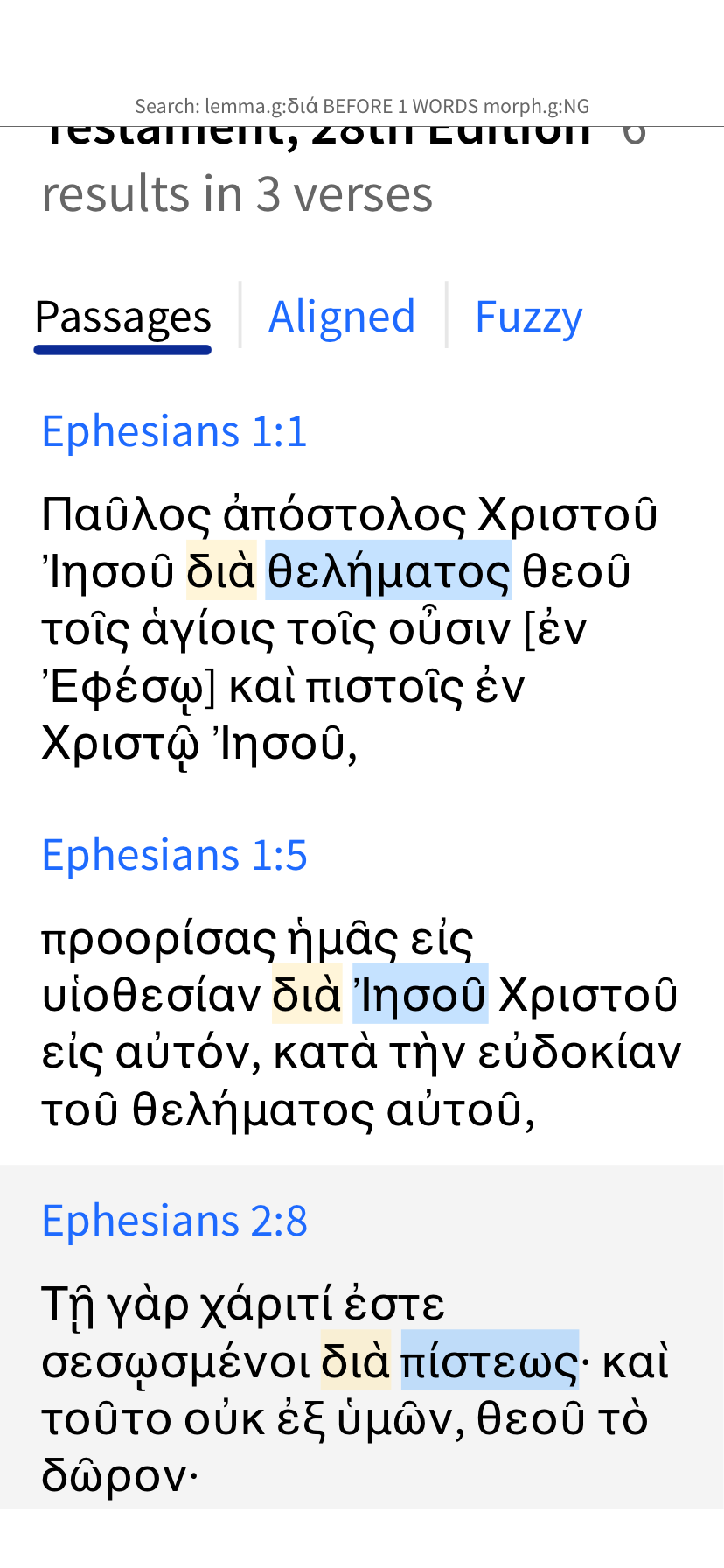
If there is some way to look for all instances in one of Paul's epistles for "dia + genitive"
(where the "genitive" could be any noun in the genitive case which comes directly after the preposition dia),
I would like to know how to do that.
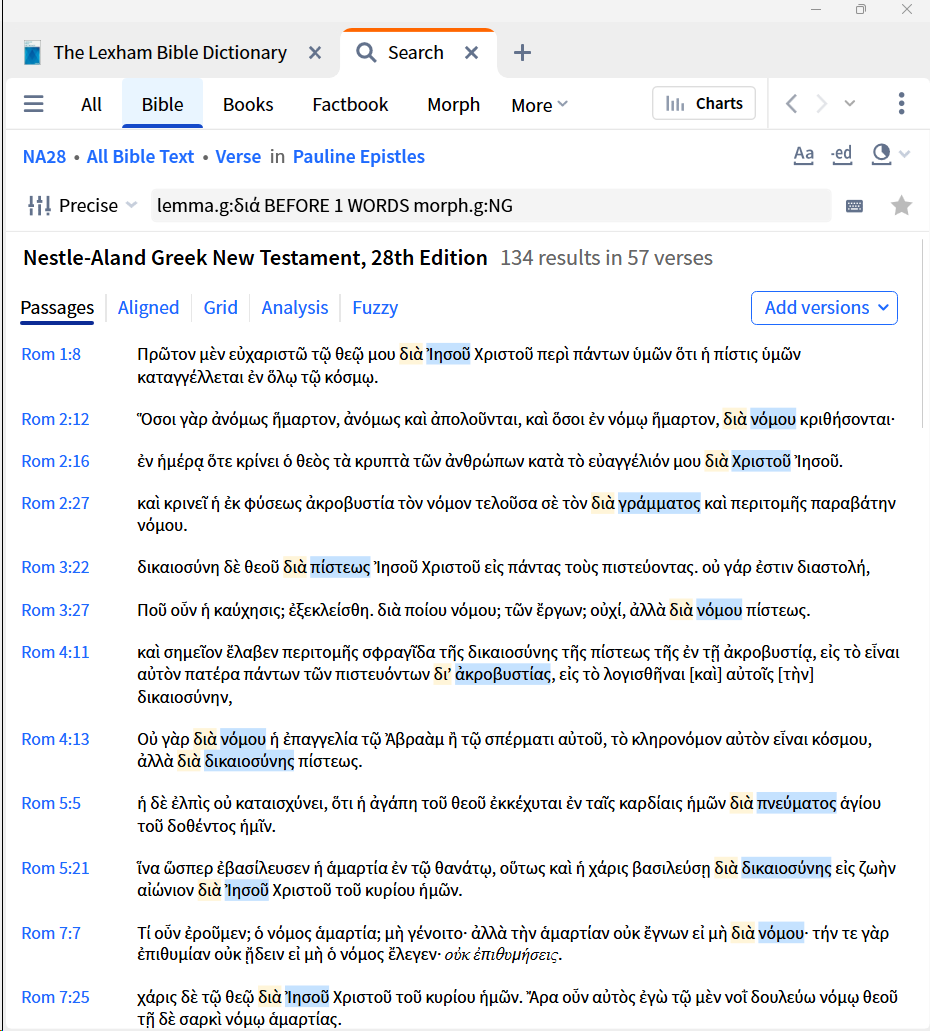
Try using the search string lemma.g:διά BEFORE 1 WORDS morph.g:NG in a Bible search constrained to the Pauline Epistles
If any of that doesn't make sense, please ask further.
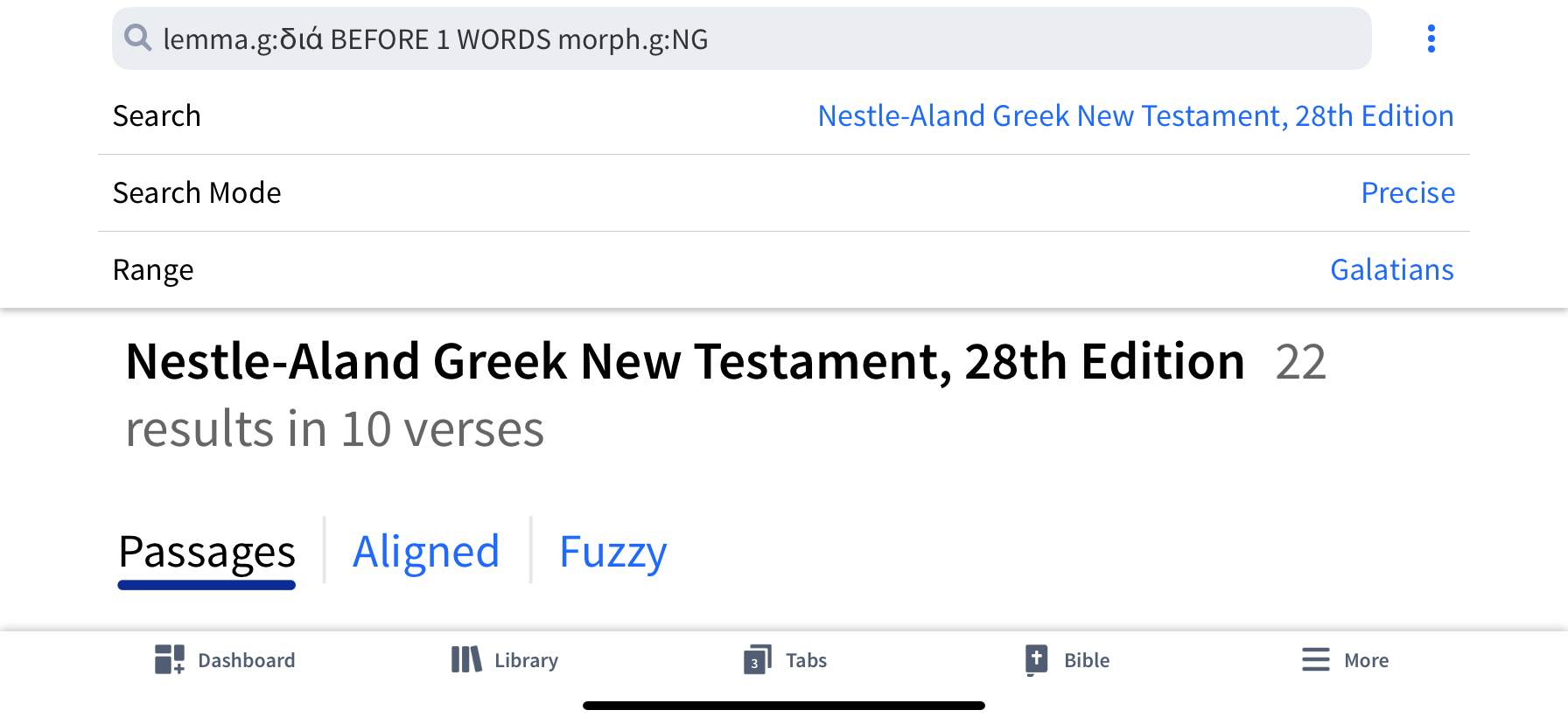
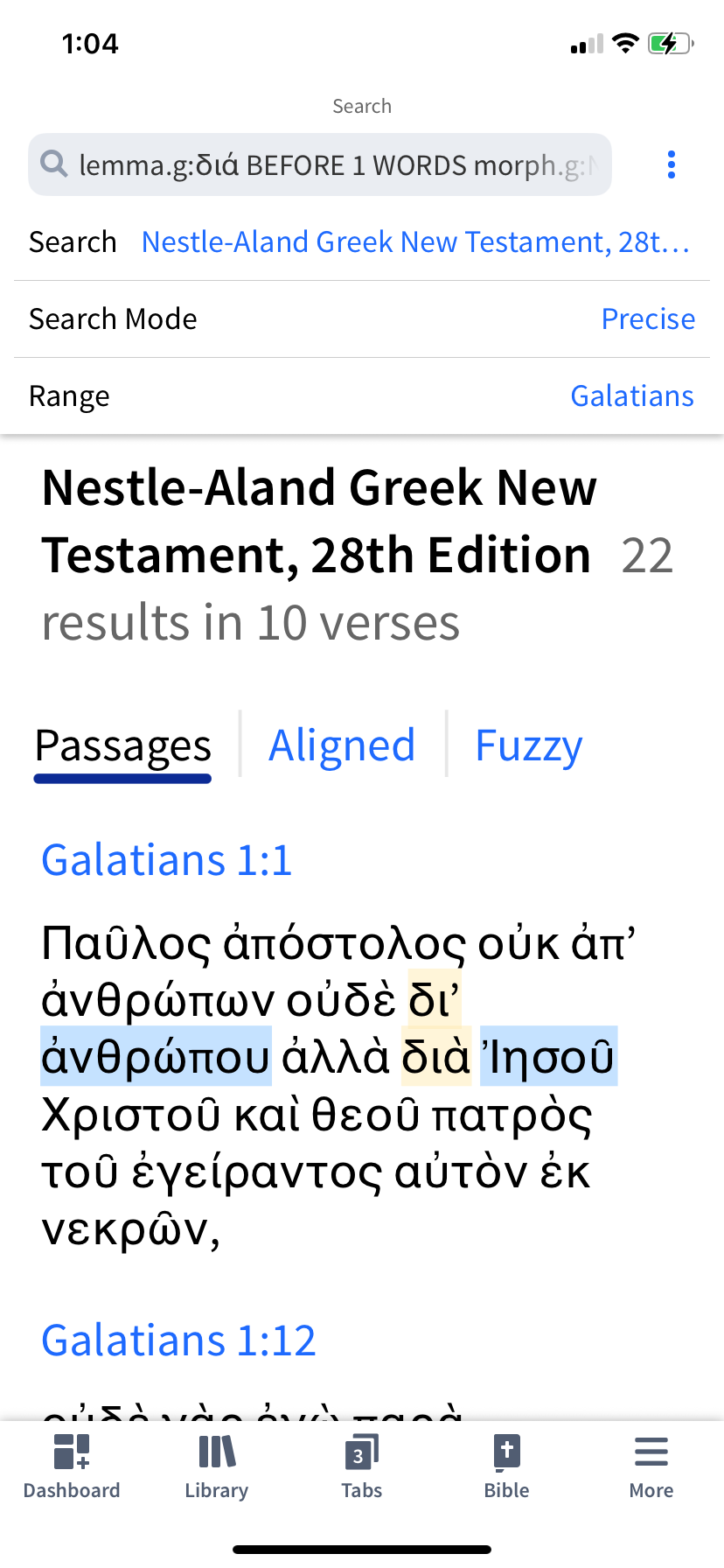
This search should work well with any of Paul’s Epistles:
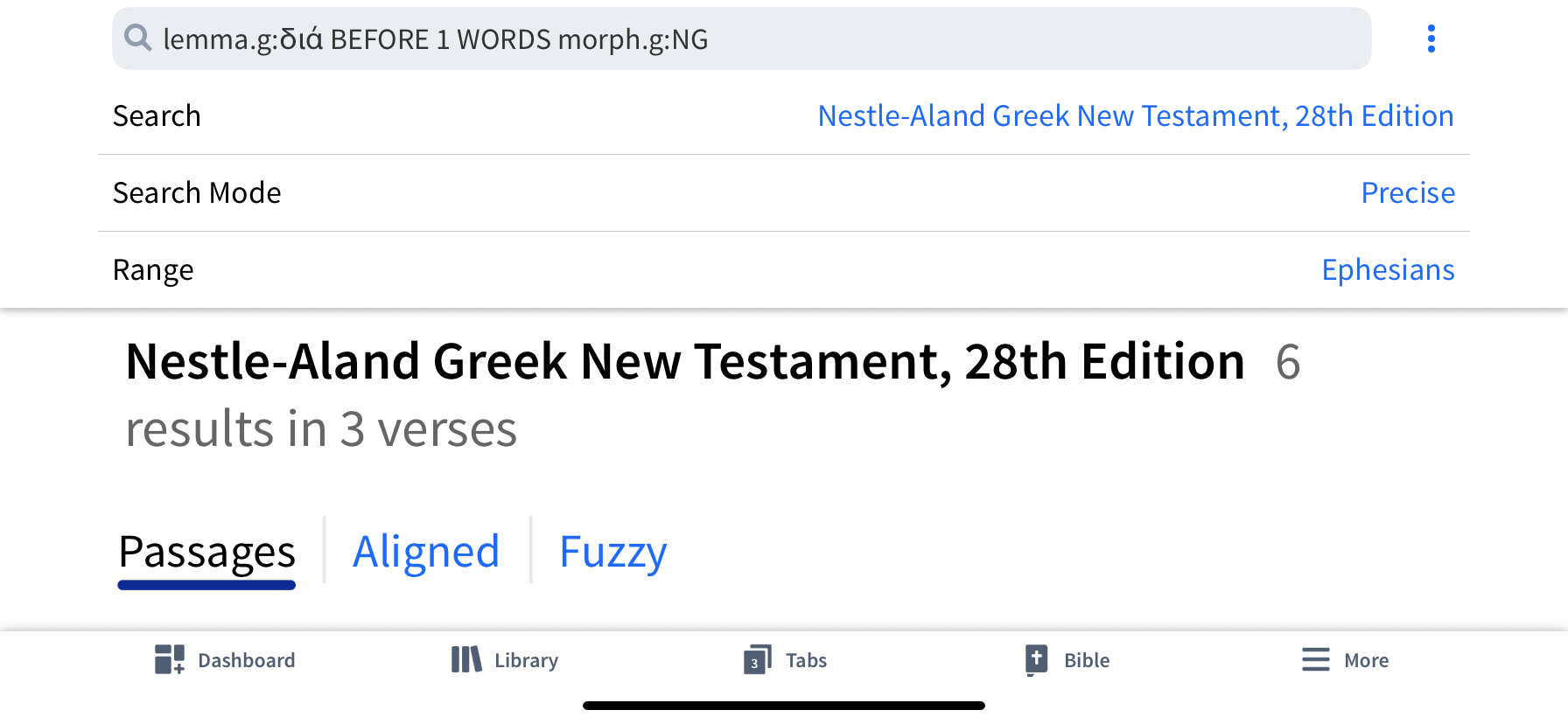
Here are the results in Ephesians:
Thanks much all! I am retired now, and back in the day, I used a program called GRAMCORD. This feature of Logos is much easier to use.
Available Now
Build your biblical library with a new trusted commentary or resource every month. Yours to keep forever.
I've noticed that my search panels in Logos always have the "Search results may be incomplete…" banner. 3 different times tonight the indexer has started, but it never seemed like it was finishing. Checking my logs, I see this in the LogosIndexerCrash.txt file (this is the entire file): Program Version: 50.0 (50.0.0.0253)…
I Had to re-install my Windows. When I re-installed LOGOS it needed to download my books. It only downloaded up to 20%, then it stops. Restarting and re-installing doesn't help
I was wanting to create a Exegetical Fallacy cheat sheet that I could carry with me. There are a lot of books and sermons etc. contain these fallacies. A lot of people don’t have ability to learn greek or have access to or can afford devices. Error occur from not being able to use resources properly or out of date ones. My…
Can anyone tell me if CHALOT has the reformat option available the way HALOT and BDAG do?
I have a new computer. When I reinstalled Logos, the translation glosses appearing upon hovering over Greek words in Nestle Aland 28 no longer show up. How do I make the translation glosses appear again?